
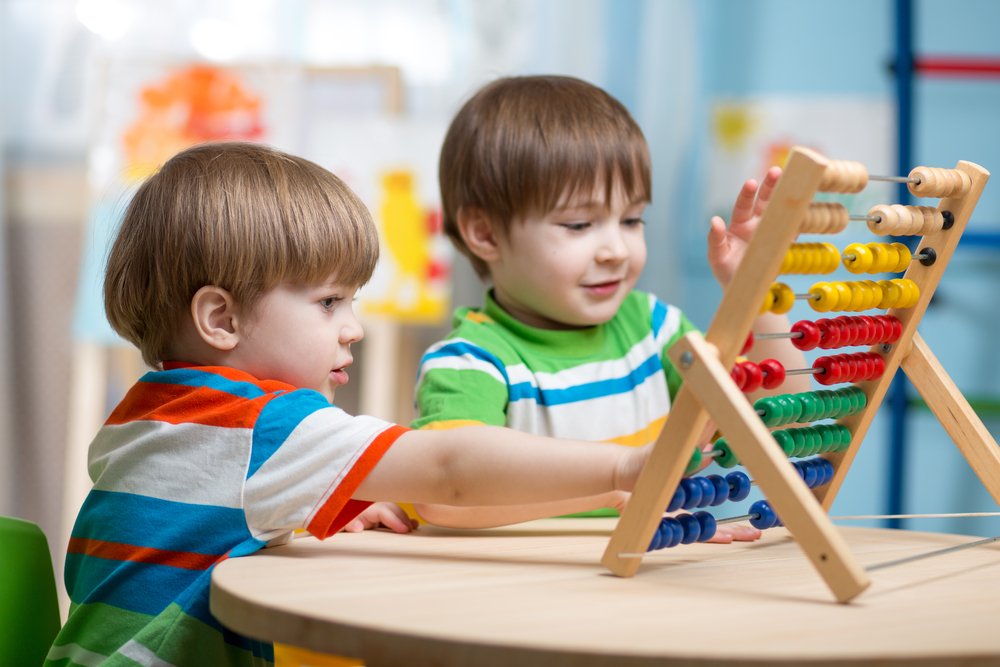
Sending a young child off to early education marks a major milestone for any family, often accompanied by curiosity about how those classroom hours are actually spent. Many parents wonder whether early learning centers focus purely on social play or follow structured academic guidelines. When considering early learning programs, including a high-quality preschool in iowa city ia, families quickly discover that these early years lay a vital foundation for emotional maturity, foundational literacy, and cognitive growth. Across the country, modern early childhood programs balance structured learning with creative exploration, ensuring that young learners build essential life skills every single day.
The Purpose of Early Childhood Education
Early childhood classrooms are intentionally designed environments where play serves as the primary vehicle for learning. Rather than sitting at desks for long lectures, young children engage in purposeful activities that stimulate brain development and build curiosity.
During these formative years, the brain forms connections faster than at any other stage of life. Quality early education takes advantage of this critical developmental window by offering experiences that foster social, emotional, physical, and cognitive growth simultaneously.
Social and Emotional Development: Building the Foundation
Before children can master academics, they must learn how to navigate their social world. Social-emotional learning forms the bedrock of every preschool schedule, teaching children how to understand their own feelings and interact positively with others.
Learning Emotional Regulation and Self-Control
Young children experience strong emotions but often lack the vocabulary or strategies to manage them. In the classroom, teachers guide children through identifying feelings such as frustration, excitement, joy, and sadness. Through guided conversations and calm-down routines, children learn self-regulation techniques like deep breathing or taking a quiet break. Mastering these self-regulation skills early helps children handle future academic stress and daily interpersonal challenges with resilience.
Developing Social Interaction and Cooperation
Sharing toys, taking turns during group activities, and listening while peers speak are complex skills for a young child. Daily group activities—such as building a block tower together or dramatic play in a play kitchen—require children to negotiate roles, communicate desires, and resolve minor conflicts. Teachers act as facilitators, modeling empathy and teaching positive language for conflict resolution.
Fostering Independence and Self-Reliance
Preschool provides a safe space for children to practice autonomy. Daily routines encourage self-care skills, including:
- Hanging up backpacks and coats on designated hooks
- Washing hands thoroughly before meals and after outdoor play
- Opening lunch containers and clearing eating areas after snacks
- Cleaning up activity centers before moving to a new task
These simple tasks build self-confidence and instill a sense of personal responsibility that transitions directly into kindergarten.
Early Literacy and Language Acquisition
Language skills expand rapidly during the early childhood years. Classrooms are rich in text, conversation, and auditory experiences that prepare children for formal reading instruction.
Phonemic Awareness and Letter Recognition
Before learning to read sentences, children must understand that spoken words are made up of individual sounds. Teachers introduce phonemic awareness through rhyming games, rhythmic chants, and listening exercises. Children learn to identify letter names and their corresponding sounds using tactile materials like sandpaper letters, tracing in tray sand, or manipulating foam letters.
Vocabulary Expansion Through Interactive Storytelling
Storytime is a focal point of the daily routine, but it involves much more than passive listening. Teachers engage children in interactive read-alouds, asking open-ended questions about the characters, predicting plot turns, and explaining new vocabulary in context. This practice broadens background knowledge, deepens comprehension, and fosters a lifelong love for books.
Emergent Writing Skills
Writing begins long before a child forms perfect letters. Children start by expressing ideas through drawings, scribbles, and letter-like forms. Classrooms provide varied writing tools—crayons, markers, colored pencils, and chalk—allowing children to practice writing their names, labeling artwork, and dictating stories to their teachers.
Early Mathematics and Logical Thinking
Mathematical concepts in early childhood are concrete rather than abstract. Children learn math by interacting with tangible objects, discovering patterns, and solving hands-on problems.
Counting, Number Sense, and Cardinality
Children learn that numbers represent specific quantities, not just a sequence of words recited by heart. Through daily routines—such as counting how many classmates are present or distributing napkins for snack time—children practice one-to-one correspondence. Counting blocks, beads, and counters helps solidify the relationship between numerals and quantities.
Shapes, Spatial Awareness, and Geometry
Recognizing two-dimensional and three-dimensional shapes involves analyzing their properties, such as counting sides and corners. Children explore spatial concepts like “above,” “below,” “next to,” and “inside” through block play and obstacle courses. Building with geometric shapes helps develop spatial reasoning, which correlates strongly with advanced math capabilities later in life.
Sorting, Categorizing, and Patterning
Recognizing patterns and sorting objects by attributes form the basis of logical reasoning. Children regularly sort buttons by color, arrange leaves by size, or create repeating patterns using colored beads. These activities teach visual discrimination and analytical thinking.
Scientific Inquiry and World Exploration
Young children are natural scientists, constantly observing, questioning, and experimenting with the world around them. Early science education harnesses this curiosity to build critical thinking skills.
Observation and Hypothesis Formation
Science centers in classrooms invite children to inspect natural objects like pinecones, rocks, seashells, and leaves using magnifying glasses. Children learn to make observations, predict outcomes, and test their ideas through simple experiments, such as determining which objects float or sink in a water table.
Understanding Nature and Life Cycles
Children learn about the natural world by examining plant growth, weather changes, and animal life cycles. Many classrooms maintain small garden patches or care for class pets, teaching children responsibility and respect for living things while observing biological concepts firsthand.
Sensory Exploration and Physics Basics
Hands-on play at sensory tables filled with sand, water, rice, or playdough introduces basic physical science concepts. Children learn about volume, weight, gravity, and cause-and-effect as they pour liquid through funnels, roll ramp cars, or balance scales.
Physical Development and Motor Skills
Physical activity is vital for young children, supporting both physical health and brain development. Daily routines incorporate specific movements that refine both gross and fine motor abilities.
Fine Motor Control and Hand-Eye Coordination
Fine motor skills involve the small muscles in the fingers and hands necessary for writing, using utensils, and dressing. Daily activities designed to build hand strength include:
- Cutting paper with child-safe scissors along straight and curved lines
- Rolling, squeezing, and shaping playdough or clay
- Threading beads onto strings and using tweezers to pick up small items
- Peeling stickers and working with buttons, snaps, and zippers
Gross Motor Development and Spatial Movement
Outdoor play and indoor movement sessions develop large muscle groups, balance, coordination, and cardiovascular health. Activities like running, climbing playground structures, hopping on one foot, catching balls, and dancing to music build overall core strength and body awareness.
Creative Arts and Expression
Art, music, and dramatic play provide outlets for self-expression, creative problem-solving, and emotional processing.
Visual Arts
Process-focused art emphasizes the experience of creation over the final product. Children explore texture, color mixing, and spatial arrangements using paints, clay, collage materials, and recycled items. This open-ended artistic freedom encourages innovation and self-worth.
Music and Movement
Singing songs, playing simple percussion instruments, and moving rhythmically help children develop auditory processing skills, rhythm, and memory. Music also aids in language acquisition as children memorize lyrics and speech rhythms through song.
Dramatic Play
The dramatic play area—equipped with costumes, puppets, and household props—allows children to role-play real-life scenarios and imaginative stories. Dramatic play builds narrative skills, empathy, and social negotiation as children take on different perspectives.
Structure of a Typical Day
Understanding how these diverse learning domains fit into a cohesive schedule helps demystify the classroom experience. While specific schedules vary across institutions, most quality early childhood programs follow a predictable structure that balances active play with quiet focus.
The following table outlines how different components of a standard day contribute to distinct areas of child development.
Daily Preschool Schedule Components and Learning Goals
| Time & Activity Block | Core Activities Included | Primary Learning Objectives |
|---|---|---|
| Morning Arrival & Choice Time | Table tasks, puzzles, free exploration | Smooth transitions, self-directed decision making, fine motor practice |
| Circle Time & Morning Meeting | Calendar, weather, morning greeting, group songs | Listening skills, group awareness, early literacy, counting |
| Guided Learning & Centers | Literacy centers, math games, science exploration | Small-group instruction, targeted academic skills, problem-solving |
| Outdoor Play & Gross Motor | Playground games, running, climbing, nature walks | Large muscle strength, balance, social collaboration, physical health |
| Snack & Mealtime | Family-style eating, conversation, cleanup | Self-help skills, table manners, social conversation, nutrition |
| Storytime & Wind-Down | Interactive read-alouds, quiet reading, reflection | Reading comprehension, vocabulary growth, emotional calming |
This balanced structure ensures that children remain engaged throughout the day without becoming overwhelmed. Predictable routines provide a sense of security, helping children feel confident as they explore new skills.
Cognitive and Executive Functioning Skills
Beyond specific academic subjects, early education targets executive functioning—the mental processes that enable us to plan, focus attention, remember instructions, and juggle multiple tasks successfully.
Working Memory
Working memory allows children to hold and manipulate information in their minds over short periods. Games like “Simon Says,” matching games, and multi-step instructions (such as “put your coat away and sit at the rug”) strengthen working memory capabilities.
Cognitive Flexibility
Cognitive flexibility is the ability to switch gears and adapt to changing rules or unexpected situations. When an outdoor playtime is moved indoors due to rain, or when an art activity requires sharing limited supplies, children learn to adapt their expectations and problem-solve flexibly.
Inhibitory Control
Inhibitory control enables children to resist impulses and stay focused on a task despite distractions. Simple games that require stopping and starting on cue—such as freeze dance—help children practice self-regulation in an engaging context.
How Parents Can Support Learning at Home
The learning that happens in the classroom is reinforced and expanded when families support similar concepts at home. Parents do not need formal lesson plans to extend early education into the household.
Simple Everyday Strategies
- Read Together Daily: Spend 15 to 20 minutes reading rich picture books together, discussing the illustrations and asking questions about what might happen next.
- Incorporate Math into Chores: Count socks while doing laundry, measure ingredients during cooking, or sort groceries by size and type.
- Encourage Open-Ended Play: Provide simple materials like cardboard boxes, blocks, and art supplies that allow for imaginative creation without prescribed rules.
- Promote Conversation: Ask specific questions about their day, such as “What was the funniest thing that happened today?” or “What did you build at school?” rather than general questions like “How was your day?”
- Establish Consistent Routines: Maintain predictable bedtime, morning, and mealtime schedules to provide emotional security and support self-regulation.
Conclusion
Early childhood education provides far more than simple supervision; it delivers a rich, multi-faceted learning environment where play and structured discovery meet. Every day, young children build foundational reading and math concepts, strengthen their physical capabilities, and master the social-emotional tools necessary for long-term academic and personal success. By fostering curiosity, independence, and resilience, quality early childhood programs set the stage for a smooth transition into kindergarten and a lifelong love of learning.
Frequently Asked Questions
What age do children usually start attending early education programs?
Most children enter early childhood programs between the ages of 3 and 4, though many centers offer toddler programs for younger children. Starting around age 3 allows children to develop foundational social and language skills before entering kindergarten.
Is play really an effective way for children to learn academics?
Yes, play is the most effective medium for early learning. Through structured and open-ended play, children experiment with cause and effect, practice language skills, build spatial awareness, and learn to navigate social interactions in natural, memorable ways.
How do teachers handle behavioral challenges or tantrums in the classroom?
Teachers use positive behavior support strategies, including setting clear expectations, maintaining consistent routines, and validating children’s emotions. They help children label their feelings and guide them toward appropriate calm-down strategies and peaceful conflict resolution.
What is the difference between preschool and daycare?
While both provide care for young children, early childhood education programs generally place a stronger focus on structured learning curricula, school readiness skills, and planned developmental activities led by qualified early childhood educators.
How can I tell if my child is ready for a structured classroom environment?
Readiness indicators include the ability to follow simple two-step instructions, express basic needs verbally, show interest in playing near or with other children, and handle brief periods of separation from parents.