
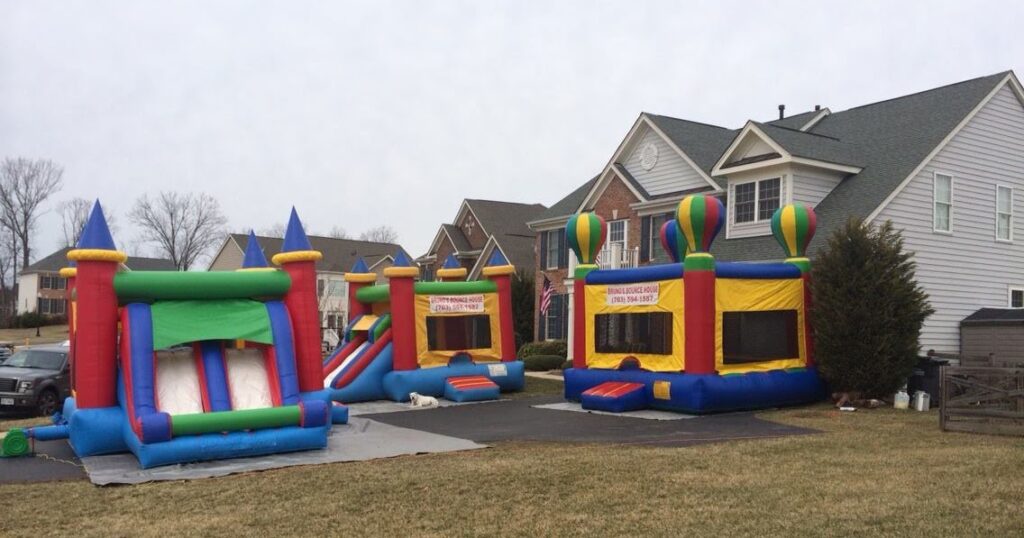
Hosting an outdoor party or community event requires careful attention to guest safety, especially when setting up interactive attractions. Renting Bounce Houses & Inflatables Rental For Event organizers can transform a gathering into an unforgettable experience, but keeping kids safe requires understanding weight and capacity limits. Determining how many children can safely jump at once depends on factors like the unit’s dimensions, the children’s age groups, and maximum weight restrictions. Overcrowding can quickly convert a fun activity into a source of injuries, making proper capacity management essential for any host.
Understanding Inflatable Capacity and Weight Limits
Every commercial-grade inflatable comes with specific manufacturer guidelines designed to prevent structural failure and physical collisions. Capacity is rarely determined by a single number; instead, it involves balancing spatial area with total weight. Ignoring these guidelines puts stress on seam stitching, reduces airflow effectiveness, and significantly increases collision risks among participants.
Total Weight vs. User Count
The total weight capacity of a standard inflatable usually dictates safety more than the physical count of children inside. Commercial units typically feature maximum payload ratings between 500 and 1,000 pounds. While ten toddlers might easily fall within a 600-pound limit, four high school students could instantly exceed it. Event hosts must evaluate total combined weight rather than focusing solely on headcounts.
Spatial Dimensions and Floor Area
Floor space determines how much distance children can maintain while bouncing. Standard residential and small event units measure 13×13 feet, offering roughly 169 square feet of bouncing surface. Larger event units measuring 15×15 feet provide 225 square feet. As a general safety rule, each child needs approximately 20 to 25 square feet of personal space to jump, flip, or land without impacting another guest.
+-----------------------------------------------------------------------+
|                       SAFE SPACE VISUALIZATION                        |
|                                                                       |
|   +---------------------------------------------------------------+   |
|   |                  15' x 15' Unit (225 sq ft)                   |   |
|   |                                                               |   |
|   |   [Child] (25 sq ft)              [Child] (25 sq ft)          |   |
|   |                                                               |   |
|   |               [Child] (25 sq ft)                              |   |
|   |                                                               |   |
|   |   [Child] (25 sq ft)              [Child] (25 sq ft)          |   |
|   +---------------------------------------------------------------+   |
|                                                                       |
|  * Rule of Thumb: Allow ~20-25 sq ft per child to prevent collisions  |
+-----------------------------------------------------------------------+
Safe Capacity Guidelines by Age and Unit Size
To help event planners organize safe rotation groups, manufacturer standards break down maximum capacity by age, physical stature, and unit dimensions.
| Inflatable Unit Size | Age Group | Recommended Max Children | Max Weight Per Child | Total Unit Weight Limit |
|---|---|---|---|---|
| 11′ x 11′ (Small) | Toddlers (Ages 2–8) | 4 to 5 | 85 lbs | 500 lbs |
| Children (Ages 9–12) | 3 | 125 lbs | 500 lbs | |
| Teens/Adults (13+) | 1 to 2 | 175 lbs | 400 lbs | |
| 13′ x 13′ (Medium) | Toddlers (Ages 2–8) | 6 to 8 | 85 lbs | 800 lbs |
| Children (Ages 9–12) | 4 to 5 | 125 lbs | 800 lbs | |
| Teens/Adults (13+) | 2 to 3 | 175 lbs | 700 lbs | |
| 15′ x 15′ (Large) | Toddlers (Ages 2–8) | 8 to 10 | 85 lbs | 1,000 lbs |
| Children (Ages 9–12) | 6 to 7 | 125 lbs | 1,000 lbs | |
| Teens/Adults (13+) | 3 to 4 | 200 lbs | 800 lbs | |
| Combo Units (w/ Slide) | Mixed Ages (5–12) | 5 to 6 total (max 2 on slide) | 150 lbs | 900 lbs |
Key Safety Factors That Influence Capacity
Beyond basic dimensions, several contextual factors dictate how many participants can safely use bounce houses at the same time.
Age and Size Grouping
Mixing age groups inside an inflatable is one of the primary causes of injury at events. When a 120-pound child lands near a 35-pound toddler, the resulting transfer of kinetic energy—often called the “bowling ball effect”—can launch the smaller child into walls or other jumpers. Always group participants by similar height and weight classes.
Activity Levels and Type of Play
The style of play drastically changes spatial requirements. High-energy games, tag, or attempts at flips require larger safety buffers than simple rhythmic bouncing. If participants are engaging in energetic play, reduce the maximum occupancy by 25% to 30% to accommodate the increased movement range.
Weather and Inflation Dynamics
Ambient temperature and wind speeds affect structural stability. High temperatures cause air inside the vinyl structure to expand, slightly altering surface tension, while cold weather can make materials less forgiving. Furthermore, strong winds (typically exceeding 15–20 mph) require immediate evacuation regardless of how many children are inside.
Practical Supervision and Queue Management Tips
Keeping an inflatable safe requires active monitoring throughout your event. Implementing simple crowd-control procedures keeps wait lines moving smoothly while enforcing safety standards.
Dedicated Adult Supervision
Never leave an operational inflatable unattended. Appoint a responsible adult operator whose sole job is monitoring the entrance and jumping area. The supervisor must enforce basic rules:
- Remove shoes, eyeglasses, jewelry, and sharp pocket objects before entering.
- Strictly prohibit flips, roughhousing, and climbing on net walls.
- Ensure riders clear the exit ramp before allowing the next group to enter.
Timed Rotation Systems
At large public festivals or school carnivals, long lines lead to overcrowded units if operators rush entry. Implement a timed wristband or queue system:
- Group children by height before they reach the entrance.
- Set timer intervals (e.g., 3 to 5 minutes of bounce time per group).
- Use a whistle signal for clear group transitions.
Conclusion
Managing bounce house capacity comes down to monitoring total weight, matching similar age groups, and maintaining adequate space per child. By adhering to manufacturer guidelines and enforcing active supervision, event organizers can prevent common injuries while ensuring everyone has a fantastic time. Prioritizing safety through organized rotation schedules guarantees that your event remains remembered for all the right reasons.
Frequently Asked Questions
Can adults jump in a bounce house with kids?
It is not recommended for adults to jump alongside young children due to the vast weight disparity. However, adults can jump separately if the unit is commercial-grade and rated for adult weight limits.
What happens if you exceed the weight limit on a bounce house?
Overloading causes the bounce floor to sag, reducing impact absorption and increasing collision risks. It can also strain the seams and blower fan, leading to sudden deflation or permanent equipment damage.
Are combo units able to hold more children than standard bounce houses?
Combo units have larger footprints, but their actual bouncing capacity is often similar to standard units. This is because strict safety limits restrict how many children can use the climbing wall and slide simultaneously.
How do wind speeds affect bounce house capacity?
Wind speed does not alter internal capacity, but high winds compromise overall structural anchoring. Inflatables must be deflated immediately if wind gusts reach or exceed 15 to 20 mph, regardless of occupancy.
Should shoes be worn inside the inflatable to prevent slipping?
No, shoes of any kind should be removed prior to entry. Socks or bare feet provide adequate traction while protecting the vinyl floor from tears, dirt, and abrasion.