
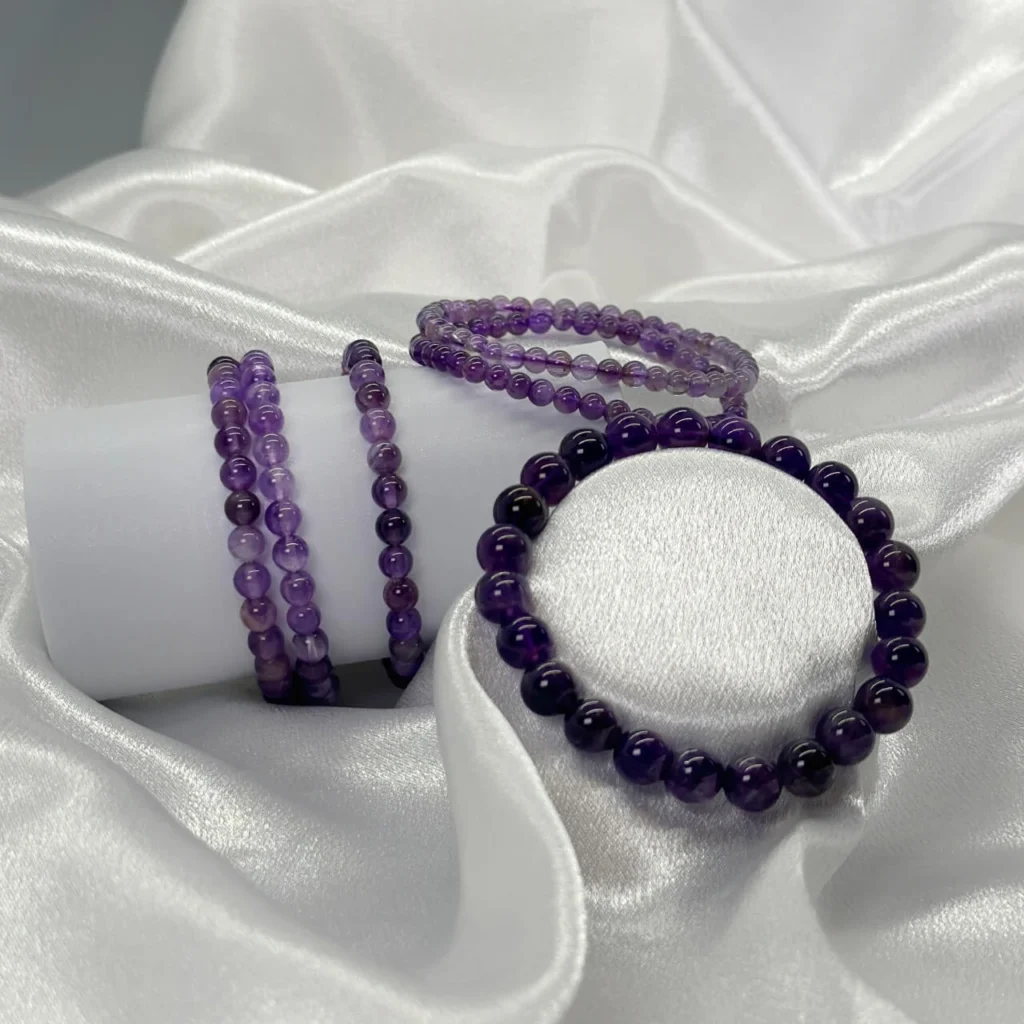
You pull a favorite piece from the jewelry box and find it dull, gray, or nearly black. Don’t panic. Whether it’s a plain chain or an amethyst bracelet set in sterling silver, the dark film is usually tarnish, not permanent damage. It can be removed safely at home with the right method. This guide explains why silver darkens, which cleaning options work, and how to protect gemstones along the way.
Why Silver Turns Black in the First Place
The chemistry behind tarnish
Tarnish is a thin layer of silver sulfide that forms when silver reacts with sulfur-containing compounds in the air. Sulfur is present in tiny amounts almost everywhere, from air pollution to household items. The layer starts as a faint yellow or gray haze and slowly deepens to brown and black.
Most bracelets are not pure silver. Sterling silver is 92.5% silver mixed with other metals, usually copper, for strength. Copper can also darken, which is why sterling often tarnishes faster than people expect. The tarnish sits on the surface, so the metal underneath is intact.
Everyday habits that speed it up
Some things accelerate tarnish more than others. Wool, rubber bands, eggs, onions, and some foods contain sulfur. Perfume, hairspray, lotions, and household cleaners can leave residues that darken silver quickly. Chlorinated pool water and hot tubs are also harsh on it.
Humidity matters too. A bracelet stored in a steamy bathroom will blacken faster than one kept in a cool, dry drawer. Wearing silver regularly slows tarnish, because gentle friction and skin contact keep the surface from building up a thick layer.
Check Your Bracelet Before You Clean It
Before you pick a method, look closely at what you are cleaning. The safest approach depends on the materials, not just the silver.
Check for gemstones, pearls, or beads. Hard stones like quartz handle most cleaning well, but soft or porous materials such as pearls, opal, turquoise, and coral can be damaged by soaking or chemicals. Look at how stones are attached. Glued stones can loosen if exposed to hot water or strong solutions.
Also notice the finish. Some designs have intentionally darkened recesses, often called an oxidized or antiqued finish, that add depth to engraving or filigree. Aggressive tarnish removal can strip that contrast and leave the piece looking flat. Finally, check for hollow or lightweight sections, because trapped liquid can cause trouble later.
If you are unsure, start with the gentlest method below and move up only if needed.
Start Gentle: Soap, Warm Water, and a Soft Cloth
Light tarnish and everyday grime often come off with plain dish soap. This method is safe for most silver and for most gemstones, so it is the right first step.
Mix a few drops of mild, phosphate-free dish soap into a bowl of warm water. Use warm, not boiling, water. Dip the bracelet briefly, then rub gently with a soft cotton cloth or an extra-soft toothbrush, working into the links and around stone settings. Rinse under lukewarm running water, and close the drain first so nothing slips away.
Dry the bracelet immediately with a clean, lint-free cloth. Leftover moisture invites new tarnish, especially in the crevices of a chain. If a faint dark tint remains, move on to a stronger method.
Removing Heavy Tarnish With Baking Soda and Aluminum Foil
When a bracelet looks truly black, the baking soda and aluminum method is a popular home option. It does not scrub the silver. Instead, it triggers a chemical reaction that moves sulfur from the silver to the aluminum, so very little metal is lost.
Here is the process:
- Line a heat-safe bowl or dish with aluminum foil, shiny side up.
- Add about one tablespoon of baking soda and a teaspoon of salt.
- Pour in enough hot water to cover the bracelet, and stir until the powders dissolve.
- Place the bracelet in the bowl so it touches the foil.
- Wait one to ten minutes, depending on how heavy the tarnish is.
- Remove it with tongs, rinse well, and buff dry with a soft cloth.
You may notice a faint rotten-egg smell. That is the released sulfur and is normal, so work in a ventilated area.
This method has real limits. It can leave antiqued details looking bright and flat, and it is a poor match for glued stones, pearls, and other porous materials. If your bracelet has gemstones, skip the soak or use a paste instead, which keeps liquid away from the settings.
Polishing Cloths, Pastes, and Commercial Dips
Polishing cloths
Treated silver polishing cloths are convenient for light to moderate tarnish. They contain a mild polishing agent that lifts the dark layer as you rub. Use one section of the cloth until it turns gray, then switch to a clean area so you do not push tarnish back onto the metal.
Rub along the length of the links rather than in circles, which can leave tiny swirl marks. A cloth is also the safest way to polish a bracelet with gemstones, since it does not involve liquid.
Liquid dips and creams
Commercial silver dips dissolve tarnish fast, often in seconds. They work well on plain silver chains but come with trade-offs. Many contain acids or strong chemicals that can damage porous stones, strip antiqued finishes, and irritate skin. They should always be used exactly as the label directs, and the bracelet must be rinsed thoroughly afterward.
Silver polish creams are gentler. You apply a small amount with a soft cloth, rub, rinse, and dry. For pieces with stones, apply cream carefully to the metal only and avoid pressing it into the gem settings, where residue can collect.
Home Remedies Worth Skipping
Many online tips sound clever but cause more harm than good. Regular toothpaste is a common suggestion, yet it contains abrasives that leave fine scratches on silver. Those scratches make the surface dull and give tarnish more places to grip. The same goes for rough scouring pads and paper towels, which are surprisingly coarse.
Bleach and ammonia should stay far away from your jewelry. They can pit the metal and damage stones. Boiling water is another risk, since sudden heat can weaken glued settings and stress some gems.
Be cautious with vinegar and lemon juice as well. Their acidity can dissolve tarnish, but it can also dull silver and harm certain stones if left on too long. If a method is not gentle enough for a delicate necklace, it is not the right choice for a bracelet you care about.
Cleaning Methods Compared at a Glance
Each method suits a different situation. The table below shows which option fits your bracelet and what to watch for. Use it as a quick decision guide, then read the matching section above for details.
| Method | Best For | Tarnish Level | Safe With Gemstones? | Main Caution |
|---|---|---|---|---|
| Dish soap and warm water | Routine cleaning, light dullness | Light | Yes, for most stones | Dry thoroughly to prevent new tarnish |
| Silver polishing cloth | Touch-ups, bracelets with stones | Light to moderate | Yes | Switch to clean cloth areas often |
| Baking soda and aluminum foil | Plain silver chains and links | Moderate to heavy | Not for porous or glued stones | Can flatten antiqued finishes |
| Silver polish cream | Detailed or textured silver | Moderate | With care, metal only | Residue can collect in settings |
| Commercial liquid dip | Plain silver without stones | Heavy | Generally no | Harsh chemicals; rinse thoroughly |
Caring for Amethyst Stones in a Silver Setting
Amethyst is a purple variety of quartz, rated about 7 on the Mohs hardness scale, so it holds up well to everyday wear and gentle cleaning. Its main weakness is color. Prolonged exposure to strong sunlight or high heat can fade the purple, so avoid leaving the piece on a sunny windowsill or near a heater.
When cleaning, treat the stones and the metal as separate jobs. Use mild soap and a soft brush on the gems, then polish the silver with a cloth. Avoid soaking the whole piece in harsh solutions, since chemicals can seep under the stones and loosen the settings over time.
Sudden temperature changes are another concern, particularly for stones with internal fractures. Rinse with lukewarm water rather than hot. If you own a bracelet with many small stones, check the prongs periodically. A stone that moves or rattles needs a jeweler’s attention before cleaning, not after.
How to Keep Silver From Turning Black Again
Cleaning removes tarnish, but prevention saves time. The goal is to limit contact with sulfur, moisture, and chemicals.
Put your bracelet on last when getting ready, after perfume, lotion, and hairspray have dried. Take it off before swimming, showering, cleaning, and cooking. Wipe it with a soft cloth after wearing to remove skin oils and sweat.
For storage, keep the bracelet in an airtight zip bag or a tarnish-resistant pouch, with as much air pressed out as possible. Anti-tarnish strips or small packets of silica gel help absorb moisture and sulfur compounds. Store pieces separately so they do not scratch each other.
Avoid keeping silver in a bathroom or kitchen, where humidity and fumes are highest. A cool, dry bedroom drawer is a far better home.
When to Take It to a Jeweler
Some situations call for professional help. If the bracelet has valuable or antique stones, a delicate oxidized design, or loose settings, a jeweler can clean it without risking damage. The same applies if tarnish returns quickly after cleaning, if you notice green or white crusty buildup, or if the metal looks pitted rather than simply dark.
Jewelers have tools such as steam cleaners and ultrasonic machines, and they know when each is appropriate for a particular piece. A short visit is often cheaper than replacing a damaged stone. It is also a good chance to have the clasp and prongs inspected.
Conclusion
A black silver bracelet is rarely ruined. In most cases, tarnish is a surface layer that comes off with soap, a polishing cloth, or a short baking soda soak. Choose the gentlest method that works, and be extra careful with stones, glued settings, and antiqued finishes. Skip abrasive shortcuts like toothpaste. Once the piece is clean, dry it fully, store it airtight, and put it on after your lotions and perfume. A few small habits will keep it bright far longer, so it is ready whenever you want to wear it.
FAQs
Can I use toothpaste to clean a tarnished silver bracelet?
It is best to avoid it. Toothpaste contains mild abrasives that can scratch silver and leave a dull, hazy surface. A soft polishing cloth or a gentle polish cream is a safer choice.
Is the baking soda and aluminum foil method safe for sterling silver?
Yes, for plain sterling silver it is generally safe because it works chemically rather than by scrubbing. Avoid it for pieces with pearls, porous stones, glued settings, or intentional dark detailing.
Why does my silver bracelet tarnish faster than other jewelry?
Sterling silver contains copper, which tarnishes readily. Humidity, perfume, lotions, sweat chemistry, and contact with sulfur-containing items can all speed it up.
How often should I clean a silver bracelet?
Wipe it with a soft cloth after each wear. Give it a soap-and-water wash every few weeks if you wear it often, and polish only when tarnish appears.
Does wearing silver regularly prevent tarnish?
It often helps. Frequent wear keeps the surface lightly buffed, while a bracelet left sitting in open air tends to darken. Wearing it won’t help if it is regularly exposed to chemicals, chlorine, or heavy sweat.