
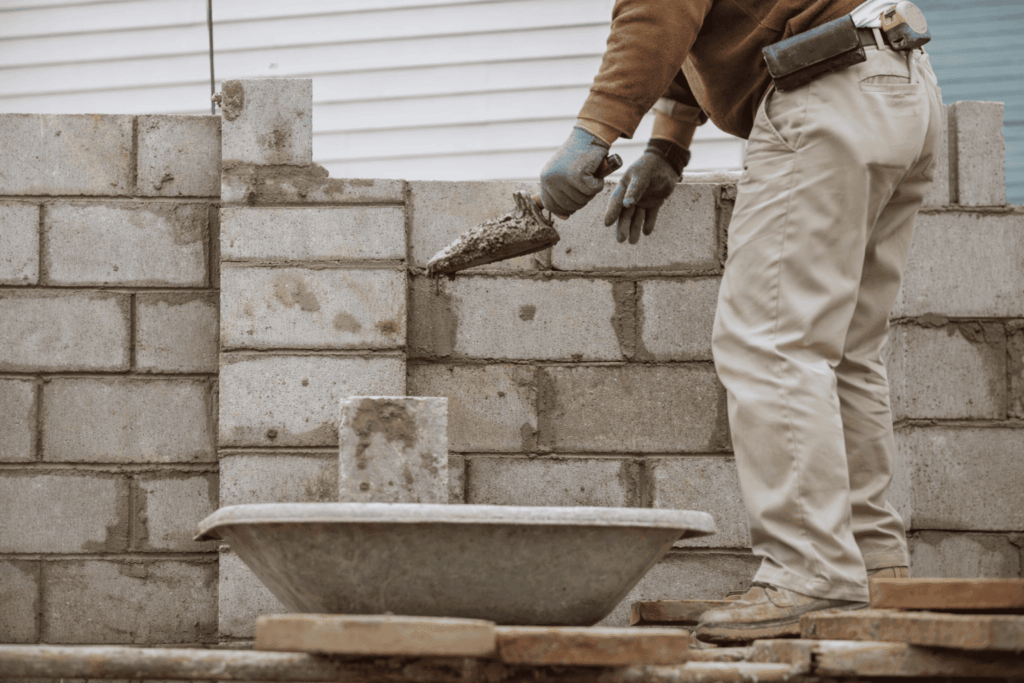
A quote for a brick wall or stone facade can feel impossible to judge until you know the per-square-foot numbers behind it. Prices vary widely by material, wall height, and region, so comparing bids from Local Masonry Contractors only helps when you understand what drives each figure. This guide breaks down 2026 costs for brick, stone, block, and repair work, shows what affects your final price, and explains how to budget with confidence.
What Masonry Work Costs Per Square Foot in 2026
Most published 2026 estimates put installed masonry between roughly $8 and $45 per square foot. That gap is real. A plain brick veneer wall sits near the bottom, while hand-set natural stone or a tall repair job that needs scaffolding sits near the top.
One national guide puts a new brick wall at $15 to $30 per square foot, with materials and labor included. Another places installed brick walls at $10 to $45 and brick veneer at $8 to $24. For stone, Homeyou lists labor at $17 to $37 per square foot, averaging about $23.
The sources differ because each defines the job differently. Some price a freestanding wall, others a thin veneer attached to an existing structure, and some cover labor only. Before you compare any two numbers, check whether they include materials, labor, framing, and cleanup.
Treat every figure here as a planning range, not a quote. Material prices, wages, and site conditions change from one metro area to the next, and only a written bid can reflect your actual wall.
Cost Ranges by Project Type
The table below pulls together the ranges most often cited for residential work. It helps you see where your project likely falls before you start collecting bids. Notes in the last column point to the details that usually move a price up or down.
Estimated Masonry Cost Per Square Foot by Project Type (2026)
| Project Type | Typical Range per Sq Ft | What Usually Affects the Price |
|---|---|---|
| New brick wall, installed | $15–$30 (some guides go to $45) | Wall height, footing needs, brick style |
| Brick veneer, installed | $8–$24 | Brick grade, bond pattern, flashing |
| Stone veneer, installed | $10–$45 | Manufactured vs. natural stone, thickness |
| Natural stone masonry, labor only | $17–$37 | Stone type, layout, site access |
| Repointing | $3–$15 | Mortar type, joint condition, height |
| Tuckpointing | $5–$25 | Mortar color matching, detail work, scaffolding |
| Brick repair | $10–$20 on average | Extent of damage, matching old brick |
| Stone veneer repair | $20–$60 | Flashing problems, upper-story access |
Ranges compiled from the sources listed at the end of this article. Individual bids can fall outside them.
Brick Walls and Brick Veneer
A structural brick wall carries load and needs a proper footing, so it costs more than veneer. Veneer is a single layer of brick tied to a framed wall, giving the look of brick without the structural mass. That is why veneer usually lands in the lower half of the range.
Brick style matters too. Standard running-bond patterns use about seven bricks per square foot, while herringbone or soldier courses use more bricks and take longer to lay, according to a masonry estimating guide from Projul. Expect decorative patterns to push labor up.
Stone and Stone Veneer
Stone has the widest price spread of any masonry material. Manufactured stone veneer overlaps with brick pricing, while natural stone sits at the high end. Stone is also often sold by weight instead of area. As a rough guide, one ton of fieldstone covers about 20 square feet of wall face at 4 inches thick, and thicker stone covers less.
Full stone masonry needs deeper anchoring and more skilled labor than veneer, which explains why labor-only figures can already reach $17 to $37 per square foot.
Repointing and Tuckpointing
Both services replace worn mortar between bricks. Repointing is the repair itself, and tuckpointing adds a decorative finish. HomeAdvisor reports that tuckpointing runs $5 to $25 per square foot, while repointing costs $3 to $15. Angi’s range is $4 to $25 per square foot for repointing, so confirm with each bidder what the price includes.
Repair Work
Repairs carry minimums that make small jobs expensive per square foot. Fixr notes that most companies charge a minimum of about $300 on small projects, and typical brick repair averages $10 to $20 per square foot. Stone veneer repair costs more because replacing chipped or buckled pieces takes careful matching.
Where the Money Goes: Materials, Labor, and Extras
Materials
Common clay brick typically costs $6 to $12 per square foot in materials, and style and type can change that. Cut or honed natural stone costs more because of the extra processing. Mortar, ties, and sand add smaller amounts, but they add up across a large wall.
Labor
Labor is often the larger share of the bill, and it reflects real skill. The same guide estimates mason labor at $7 to $17 per square foot, with hourly rates of $50 to $100. Fixr cites a slightly lower hourly band of $45 to $85. A cheap hourly rate does not always mean a cheaper project, because slower or less experienced crews can take longer.
Extras That Rarely Appear in a Per-Foot Rate
Several costs sit outside the headline number:
- Framing: a new wall may need framing at roughly $7 to $16 per square foot.
- Footings and supports: taller walls often need additional structural support.
- Flashing and waterproofing: these protect the wall from moisture and are worth paying for.
- Permits, scaffolding, and cleanup: some contractors fold these into the price, and others list them separately.
What Pushes Your Masonry Price Up or Down
Wall Height and Access
Height changes the job. For tuckpointing, contractors commonly charge at least $10 per square foot on surfaces 8 feet or higher because of the added setup and risk. A chimney, a gable end, or a second-story wall all need scaffolding or lifts, which add equipment and labor time.
Project Size and Minimum Charges
Larger jobs spread setup costs across more square feet, so the per-foot rate often drops. Small jobs do the opposite. Fixr’s chart shows repairs of 18 square feet or less running $300 to $400, while a 100-square-foot repair runs $1,000 to $2,000. If you have several small problems, grouping them into one visit may lower the cost per foot.
Design Complexity
Arches, curves, corners, patterned brickwork, and mixed materials all slow the crew. A straight, unbroken wall is the cheapest to build. Every window opening, return, or decorative band adds cuts and detail work.
Region and Timing
Wage levels and demand for skilled masons vary across the country, so the same wall can cost noticeably more in a high-cost metro area than in a smaller market. Ask contractors whether the timing of your project affects their schedule and price. Busy seasons can mean longer waits.
Three Sample Budgets Using These Ranges
These examples are simple arithmetic based on the ranges above. They are illustrations, not real quotes.
A 100-square-foot brick repair. At $10 to $20 per square foot, expect roughly $1,000 to $2,000, which matches the repair chart cited earlier.
A 1,200-square-foot brick veneer exterior. At $8 to $24 per square foot, the total runs from about $9,600 to $28,800. The wide spread shows why brick grade and bond pattern deserve attention before you sign.
Repointing a 2,000-square-foot brick house. At $3 to $15 per square foot, the math lands at $6,000 to $30,000. HomeAdvisor’s own estimate for a 2,000-square-foot brick house is the same $6,000 to $30,000. A house with sound mortar and easy access sits near the low end, and one with deep joint damage and tall walls sits near the high end.
How to Compare Bids From Masonry Contractors
A low bid is only useful if it covers the same work as the others. Ask every masonry contractor to put the scope in writing, then compare line by line.
Look for these details in each estimate:
- Square footage measured, and whether it matches your own measurement
- Brick, stone, or mortar type, including color and size
- Whether flashing, weep holes, and waterproofing are included
- Scaffolding, cleanup, and debris removal
- Payment schedule and warranty terms
Also confirm that each contractor carries the license your state requires, along with liability insurance. Requirements differ by state, so check with your state or city licensing office. Ask to see recent projects similar to yours, especially for repointing, where mortar that is harder than the surrounding brick can cause damage over time. A good mason will explain how they match mortar to older brick.
Be wary of vague one-line quotes or pressure to decide on the spot. A clear, itemized bid usually signals a contractor who has thought through the job.
Practical Ways to Keep Masonry Costs Under Control
Fix small problems early. A few cracked joints cost far less to repoint than a wall with water damage behind it. Moisture that reaches framing or insulation turns a modest mortar job into a much larger repair.
Consider veneer where structure is not required. Brick or stone veneer gives a similar look to a full wall at a lower price. Ask your contractor whether a veneer would meet your needs and local building code.
Bundle work. If your chimney, front steps, and a garden wall all need attention, one mobilization can cost less than three separate visits. Request pricing for both bundled and separate scopes.
Finally, resist cutting corners on prep, flashing, or mortar quality to shave the bid. Those details determine whether the work lasts decades or fails early.
Conclusion
Masonry pricing in 2026 comes down to what you are building, how tall and complex it is, and how much skilled labor it needs. Most residential work falls between about $8 and $45 per square foot, with repairs and repointing often at the lower end and natural stone at the top. Use the ranges here to sanity-check your budget, then collect at least three itemized bids that cover the same scope. Ask questions about mortar, flashing, and access costs, and choose the contractor who explains the work clearly, not simply the lowest number.
Frequently Asked Questions
1. How much does a 1,000-square-foot brick veneer project cost?
Using the $8 to $24 per square foot range for installed veneer, expect about $8,000 to $24,000. Brick quality, pattern, flashing, and site access decide where your project lands.
2. Is stone more expensive than brick?
Usually, yes at the high end. Natural stone installs for more per square foot than most brick, mainly because it is heavier and slower to set. Manufactured stone veneer can cost about the same as brick.
3. Is tuckpointing cheaper than repointing?
Not always. Published ranges show repointing at roughly $3 to $15 per square foot and tuckpointing at $5 to $25. Tuckpointing ads decorative finishing, but contractors define the terms differently, so ask what each quote includes.
4. Why do tall walls and chimneys cost more per square foot?
Height requires scaffolding or lifts and slows the work. Some contractors set a minimum of about $10 per square foot for tuckpointing above 8 feet.
5. Should I choose the lowest masonry bid?
Only if it covers the same scope as the others. Compare materials, flashing, cleanup, and warranty terms line by line. A much lower price often means something is missing.