
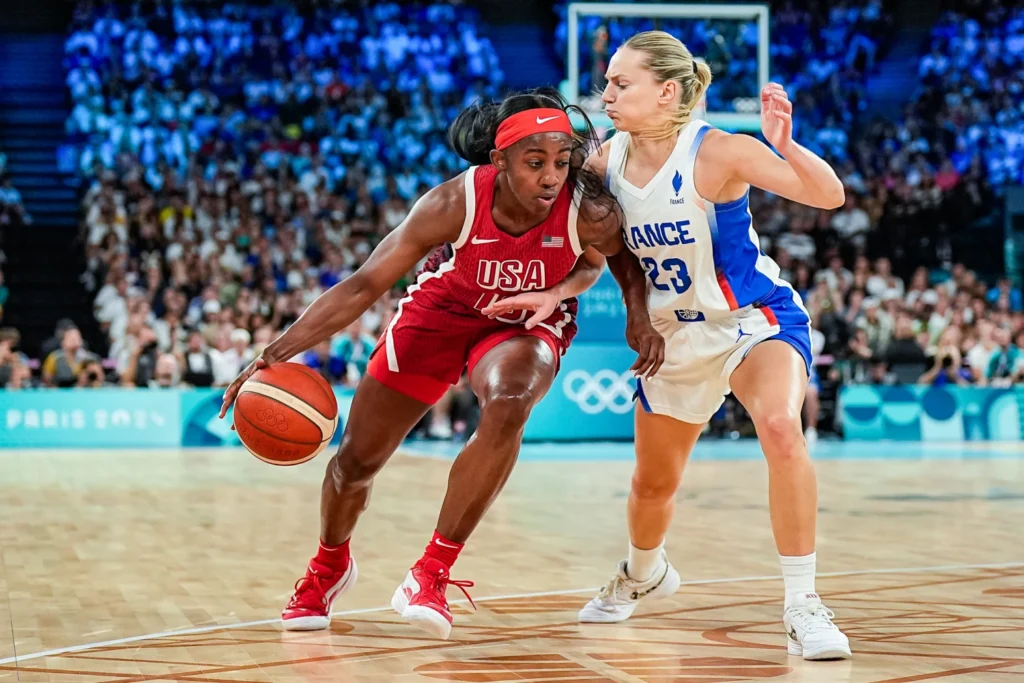
Whether you are tuning into a live broadcast on television or planning a trip to a home arena, timing is everything for dedicated sports fans. If you have ever wondered about exact game durations while tracking Women’s Basketball News in DMV area programs or national collegiate action, understanding the clock format provides clear expectations for game day. While official rulebooks define standard clock play precisely, real-world factors such as media timeouts, foul calls, video reviews, and potential overtime periods determine how much total time you will actually invest while watching a matchup.
Standard Game Length: Official Clock Minutes vs. Real-World Time
An official NCAA women’s college basketball game consists of 40 total minutes of regulation playing time. This duration is divided into four 10-minute quarters, which replaced the former two 20-minute half format prior to the 2015–16 collegiate season.
However, the clock on the arena scoreboard represents only live action. In real-world conditions, a standard women’s college basketball game typically takes between 1 hour and 45 minutes to 2 hours from the opening tip-off to the final buzzer. Broadcasted games, particularly high-stakes conference clashes or postseason tournament games, lean closer to the two-hour mark due to mandatory media commercial breaks.
Breakdown of the Quarter System in Women’s College Basketball
The transition to four 10-minute quarters in 2015 aligned women’s college basketball with WNBA and FIBA international standards. This system alters how timing and flow function throughout the course of a contest.
First Half Duration
The first half comprises Quarter 1 and Quarter 2, offering 20 total minutes of game clock action. Between the first and second quarters, teams take a brief 75-second inter-quarter break. This short interval allows players to catch their breath, lets coaches make quick tactical adjustments, and keeps the game moving swiftly without interrupting momentum.
Halftime Intermission
Once the second quarter concludes, teams head to their respective locker rooms for halftime. Under standard NCAA rules, halftime lasts exactly 15 minutes. Halftime provides crucial time for coaching adjustments, stat reviews, and arena entertainment before teams return to the court for a mandatory warm-up window prior to starting the third quarter.
Second Half Duration
The second half mirrors the first, featuring Quarter 3 and Quarter 4. A 75-second break separates the third and fourth quarters. Because teams often accumulate fouls late in the fourth quarter and coaches utilize remaining timeouts strategically, the fourth quarter frequently takes longer in real time than any preceding quarter.
Key Factors That Extend Real-World Game Duration
While 40 minutes of game play is fixed, several standard game events stop the clock and extend the overall broadcast duration.
- Timeouts: Each team receives a set allocation of team timeouts (typically 30-second and 60-second variations). In televised games, media timeouts occur automatically at designated dead-ball intervals in each quarter.
- Fouls and Free Throws: Every defensive, offensive, or technical foul stops the game clock. Free throw sequences pause play while athletes line up along the key, adding significant elapsed time during foul-heavy quarters.
- Instant Replay Reviews: Referees utilize court-side monitors to review contested out-of-bounds plays, clock errors, potential unsportsmanlike fouls, or shot-clock violations, particularly inside the final two minutes of play.
- Out-of-Bounds and Dead Balls: The game clock stops every time the ball goes out of bounds, following a whistle for a violation (such as traveling or double dribble), or during injury delays.
Overtime Rules and Added Time
When regulation play ends with both teams tied on the scoreboard, the game extends into extra periods. Overtime adds both official clock minutes and real-world time to the event.
In NCAA women’s college basketball, each overtime period lasts 5 minutes. Before the extra period begins, teams are granted a 2-minute intermission. Team fouls carry over directly from the fourth quarter, meaning teams already in the penalty shoot free throws immediately upon being fouled. If the score remains tied at the end of the first overtime, additional 5-minute periods are played until a winner is decided. A single overtime period generally adds 15 to 20 minutes of real-world time to the total duration of the event.
Comprehensive Timing Breakdown of a Women’s College Basketball Game
The following table provides a clear structural comparison between official game clock allocations and actual real-time durations for each segment of a college basketball game.
| Game Segment | Official Game Clock Time | Average Real-World Duration | Key Activity & Purpose |
| Quarter 1 | 10 Minutes | 15–20 Minutes | Opening tip-off, early offensive sets, initial rotations. |
| Quarter Break (Q1 to Q2) | 0 Minutes | 75 Seconds | Short court reset, player hydration, quick tactical notes. |
| Quarter 2 | 10 Minutes | 15–20 Minutes | Team foul management, depth utilization, second-quarter push. |
| Halftime | 0 Minutes | 15 Minutes | Full locker room adjustments, statistical analysis, rest. |
| Quarter 3 | 10 Minutes | 15–20 Minutes | Second-half adjustments, pacing control, momentum shifts. |
| Quarter Break (Q3 to Q4) | 0 Minutes | 75 Seconds | Brief final-quarter prep and strategic positioning. |
| Quarter 4 | 10 Minutes | 20–30 Minutes | High-intensity execution, intentional fouls, late timeouts. |
| Overtime Period (If Tied) | 5 Minutes | 15–20 Minutes | 5-minute extra period to determine the winner if tied after Q4. |
| Full Game Total (No OT) | 40 Minutes | 1 Hr 45 Min – 2 Hours | Complete regulation game duration from tip-off to final whistle. |
Conclusion
Understanding how long a women’s college basketball game lasts helps fans plan their schedules whether attending games in person or watching online. While the official game clock totals exactly 40 minutes across four 10-minute quarters, real-world factors such as halftime, media timeouts, foul stoppages, and replay reviews mean you should plan for about two hours of total time. Should the contest require overtime to break a tie, expect to add another 15 to 20 minutes per extra period. With this knowledge of timing and structure, you can comfortably follow every minute of exciting collegiate court action.
Frequently Asked Questions
How many quarters are played in a women’s college basketball game?
A women’s college basketball game is divided into four 10-minute quarters, resulting in 40 minutes of total regulation playing time.
When did NCAA women’s basketball switch from halves to quarters?
The NCAA officially changed the women’s basketball format from two 20-minute halves to four 10-minute quarters starting in the 2015–16 season.
How long is halftime in women’s college basketball?
Standard halftime in NCAA women’s basketball lasts 15 minutes between the end of the second quarter and the start of the third quarter.
How long does an overtime period last in college basketball?
Each overtime period in women’s college basketball is 5 minutes long on the game clock, preceded by a 2-minute break.
Why do women’s college basketball games take two hours if the clock is only 40 minutes?
Frequent clock stoppages—including team timeouts, commercial breaks, fouls, free throws, out-of-bounds plays, and referee video reviews—extend live games to around two hours in total real-world duration.