
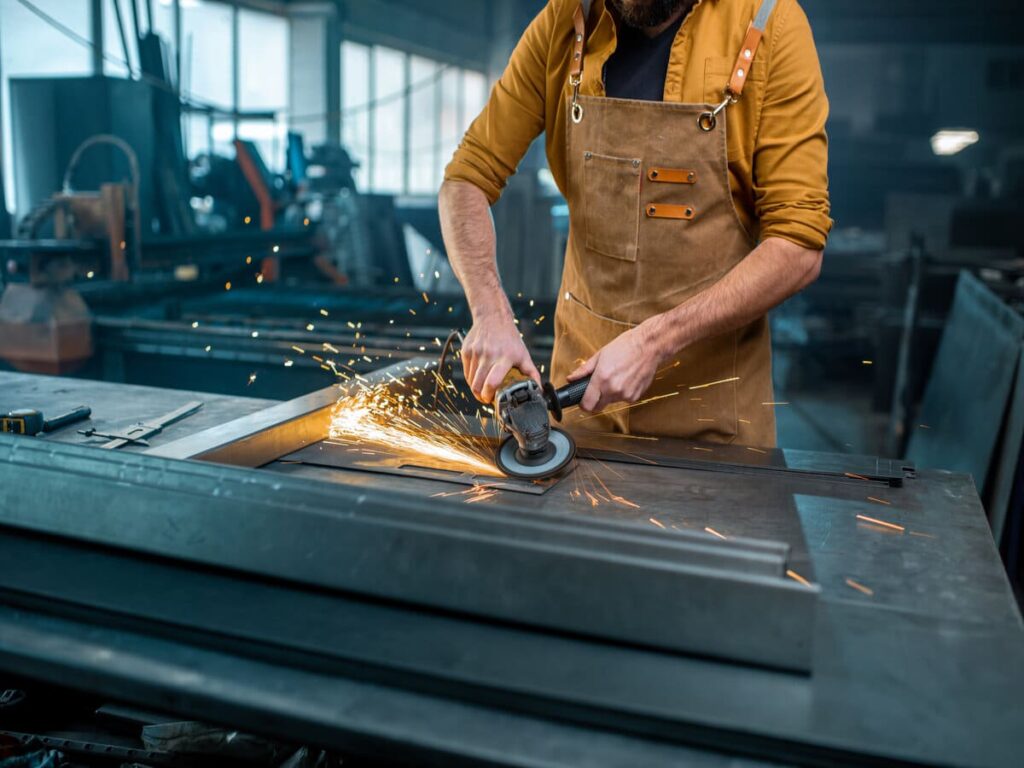
Starting a metal project or scaling up industrial production often brings up confusing terminology. Many people use the terms interchangeably, assuming that shaping steel or assembling machinery all falls under the same umbrella. However, if you are searching for local welding and fabrication near me to build a custom prototype or specialized component, you will quickly realize that taking a hand-crafted architectural beam to a high-volume factory line is not the right fit. Understanding how custom metal shaping differs from broad-scale industrial output saves time, controls project costs, and ensures you hire the right facility for your specific needs.
While both processes transform raw materials into functional, finished items, they operate at vastly different scales, utilize different equipment, and serve distinct purposes in the supply chain. Fabrication is generally a custom, component-driven process that focuses on cutting, bending, and joining metal to create specific structures. Manufacturing, on the other hand, is an overarching umbrella that includes fabrication alongside chemical processing, assembly line automation, and mass production to turn raw materials into finished consumer or industrial goods on a large scale.
Defining the Basics: What Is Fabrication?
Fabrication is the process of building structures or individual components from raw or semi-finished metal materials. It relies heavily on skilled trade workers who take stock metal—such as sheets, plates, bars, rods, and tubes—and alter its form through physical processes. Rather than creating a uniform product by the thousands, metal fabrication often focuses on custom, low-volume, or job-specific tasks.
In a typical fabrication workshop, technicians read blueprints and structural drawings to create one-off pieces or limited production runs. The work requires high adaptability because every job presents unique dimensions, tolerances, and structural requirements.
The Core Techniques Used in Fabrication
The fabrication process consists of several distinct stages, each requiring specialized machinery and technical skill:
- Cutting: Raw stock is cut to size using tools like plasma cutters, fiber lasers, waterjets, or mechanical shears. Modern laser cutting allows for tight tolerances on complex sheet metal profiles.
- Forming and Bending: Metal plates and sheets are shaped using press brakes, roll benders, or stamping presses. Bending alters the geometry of the metal without removing material.
- Joining and Assembly: Once individual components are cut and shaped, they are joined together. This is where specialized welding and fabrication techniques come into play, using methods like MIG, TIG, or Stick welding, along with mechanical fasteners, rivets, or industrial adhesives.
- Finishing: The completed structure undergoes surface treatment, such as grinding, sandblasting, powder coating, or galvanizing, to prevent corrosion and improve appearance.
Examples of fabricated items include custom structural steel frames for commercial buildings, heavy equipment buckets, decorative architectural railings, specialized tanks, and custom chassis for specialized vehicles.
Defining the Basics: What Is Manufacturing?
Manufacturing is a broader, multi-step process that encompasses the entire lifecycle of converting raw materials or basic components into finished products on a medium to large scale. While fabrication deals primarily with structural metal transformation, manufacturing includes everything from electronics assembly and plastic injection molding to textile production, chemical processing, and automotive assembly.
Manufacturing systems are designed for high repeatability, efficiency, and scale. The goal of a manufacturing operation is usually to produce identical items at a low unit cost using standardized processes, automated equipment, and structured assembly lines.
Key Characteristics of Modern Manufacturing
Manufacturing operations rely on high-level systems management and automation to maintain consistency:
- Scale and Repeatability: Operations are optimized to yield hundreds, thousands, or millions of identical units with minimal variation.
- Integration of Multiple Disciplines: A single manufacturing line might combine metal fabrication, plastic molding, electrical wiring, robotic painting, and automated quality testing.
- Supply Chain Management: Manufacturing requires complex logistics to source raw materials, manage inventory, coordinate sub-assemblies, and distribute finished goods to market.
- Automation and Robotics: Mass manufacturing relies heavily on automated assembly lines, robotic arms, and Computer Numerical Control (CNC) machinery to minimize manual labor and maximize output speed.
Common examples of manufactured products include passenger automobiles, consumer electronics, household appliances, packaged food products, and mass-produced hardware.
Fabrication vs. Manufacturing: The Core Differences
To understand how these two concepts interact, it helps to analyze them across several key operational factors: scale, processes, tooling, and labor requirements. Fabrication can actually be viewed as a subset or specialized phase of the broader manufacturing industry.
       +-------------------------------------------------------+
       |                 MANUFACTURING                         |
       |  (Overall system: Raw Materials -> Finished Goods)    |
       |                                                       |
       |   +-------------------+    +----------------------+   |
       |   |   FABRICATION     |    |   OTHER PROCESSES    |   |
       |   | - Cutting         |    | - Injection Molding  |   |
       |   | - Bending         |    | - Chemical Synth.    |   |
       |   | - Welding         |    | - Electrical Assembly|   |
       |   +---------+---------+    +----------+-----------+   |
       |             |                         |               |
       |             +------------+------------+               |
       |                          |                            |
       |                          v                            |
       |                FINAL ASSEMBLY LINE                    |
       +--------------------------+----------------------------+
                                  |
                                  v
                            Finished Product
Scale of Production
The most obvious difference lies in volume. Fabrication shops typically handle job-shop operations, custom work, or short production runs. If a construction site needs twenty custom steel trusses designed for an asymmetrical roof, a fabricator handles the job.
Conversely, if an automaker needs 500,000 identical floor pans stamped and assembled per year, that falls strictly under mass manufacturing. Fabrication focuses on flexibility and customization, whereas manufacturing focuses on volume and standardization.
Labor and Skill Requirements
Fabrication relies heavily on the craft and manual expertise of individual tradespeople. A skilled fabricator must know how to read complex schematics, select the right metal alloys, adjust weld settings for different material thicknesses, and correct heat distortion by hand.
In mass manufacturing, human labor is often geared toward system operation, quality control inspection, machine setup, and line maintenance. While high-level manufacturing engineering requires immense expertise, the line operators themselves perform highly standardized, repetitive tasks that are increasingly assisted or replaced by robotics.
Tooling and Equipment
Fabrication shops utilize versatile equipment that can be reconfigured quickly for different projects. A single press brake or plasma table in a fabrication shop might process stainless steel enclosures in the morning and heavy carbon steel brackets in the afternoon.
Manufacturing facilities use dedicated, highly specialized tooling designed for a single product line. Stamping dies, automated welding jigs, and custom assembly line tracks are expensive to design and install, but they yield an extremely low per-unit cost when producing items at scale.
Summary Comparison: Fabrication vs. Manufacturing
The table below breaks down the primary operational distinctions between metal fabrication shops and full-scale manufacturing facilities.
| Operational Factor | Fabrication | Manufacturing |
|---|---|---|
| Primary Focus | Building individual metal structures or components | Converting raw materials into finished consumer/industrial goods |
| Production Volume | Low to medium volume; custom or job-shop runs | High volume; mass production and assembly lines |
| Input Materials | Stock metal plates, sheets, tubes, bars, and structural shapes | Raw materials, raw metals, plastics, chemicals, and pre-made components |
| Tooling & Setup | Highly adaptable, general-purpose machinery (press brakes, lasers, welders) | Specialized, fixed tooling, custom dies, and automated assembly tracks |
| Labor Dynamics | High reliance on skilled trades (welders, fitters, machinists) | High reliance on automation, system operators, and line technicians |
| Customization | High; tailored to custom engineering specs and blueprints | Low; highly standardized with rigid design controls |
| Cost Structure | Higher cost per unit; low upfront setup cost | Lower cost per unit; extremely high initial capital investment |
How Fabrication and Manufacturing Work Together
It is a mistake to view fabrication and manufacturing as opposing industries; in reality, they are deeply interdependent. Fabrication is an essential stage within the broader manufacturing ecosystem.
Consider the process of building an industrial tractor:
- Raw Material Stage: Steel mills produce sheet metal, steel tubing, and plate stock.
- Fabrication Stage: A specialized metal workshop cuts the plate stock, bends the cab panels, and uses structural welding and fabrication processes to construct the heavy steel chassis and loader arms.
- Component Supply: The fabricated chassis is shipped to the main tractor factory.
- Manufacturing Stage: The tractor manufacturer places the chassis onto an assembly line. Workers and robots install the engine, hydraulic lines, plastic dashboard panels, glass windows, electrical harnesses, and rubber tires.
- Finished Product: The completed tractor rolls off the line, fully tested and ready for sale.
Without precise metal fabrication, the main manufacturing assembly line would have no structural frame upon which to build the final machine. Conversely, without mass manufacturing, component fabricators would have a much smaller market for their structural sub-assemblies.
Choosing the Right Partner for Your Project
Knowing whether your project requires a metal fabricator or a full-scale manufacturing partner is critical to controlling your budget and meeting quality standards. Choosing the wrong type of facility can lead to excessive setup costs or an inability to deliver the required design adjustments.
When to Work with a Metal Fabrication Shop
You should seek out a specialized fabrication facility if your project involves:
- Custom or Prototype Work: You need a one-off prototype, a custom machine frame, or specialized structural steel for a commercial building.
- Low-Volume Orders: You require short production runs ranging from a single piece up to a few hundred units.
- Heavy Metal Work: Your design relies on heavy structural steel shapes, thick plate cutting, and certified structural welding.
- Frequent Design Revisions: Your product design is still evolving and requires a flexible partner who can adapt blueprints without retooling an entire assembly line.
When to Work with a Manufacturing Facility
You should partner with a contract manufacturer if your project involves:
- Mass Production: You have a fully finalized design and need thousands or millions of identical units delivered consistently over time.
- Multi-Material Products: Your end product integrates metal parts with molded plastics, circuit boards, glass, or rubber components.
- Turnkey Consumer Packaging: You require final product assembly, testing, packaging, and direct distribution to retail or wholesale channels.
- Cost Minimization at Scale: Your primary financial metric is reducing the individual cost per unit through high-volume automated assembly.
Practical Takeaways for Procurement and Product Development
To keep your supply chain efficient and avoid costly project delays, keep these operational rules of thumb in mind:
- Differentiate Components from Products: Determine whether you need a single structural metal frame (a fabrication job) or a fully functional, multi-part finished assembly (a manufacturing job).
- Evaluate Tooling Costs Early: If you choose high-volume manufacturing before your product design is fully tested, design changes will require expensive retooling. Use custom fabrication for initial prototyping and low-volume field testing first.
- Verify Certifications: When sourcing structural welding or specialized metal forming, ensure the shop holds relevant trade certifications (such as AWS for welding or ISO standards for quality management) to guarantee structural integrity.
- Design for Manufacturability (DFM): If you plan to scale a fabricated metal prototype into a mass-manufactured product, work with manufacturing engineers early to simplify bends, standardize hole sizes, and reduce weld times.
By clear-cutting the distinction between these two vital industrial sectors, engineers, project managers, and business owners can make informed procurement decisions that balance structural quality, production speed, and overall project costs.
Conclusion
Understanding the distinction between fabrication and manufacturing comes down to recognizing scale, scope, and process flexibility. Fabrication is a precise, component-focused trade that shapes and joins raw metals into custom structures. Manufacturing is the overarching industrial system that integrates fabricated parts, raw materials, and automated assembly to deliver finished products at scale. Neither process is superior; rather, they form the backbone of modern infrastructure and product development together. Identifying your project’s volume, material needs, and customization requirements will point you directly to the right partner for the job.
Frequently Asked Questions
Is welding considered fabrication or manufacturing?
Welding is a specific joining process used within both fabrication and manufacturing. In a fabrication shop, welding is performed by skilled tradespeople to assemble custom structural frames. In mass manufacturing, welding is often automated using robotic arms to join repetitive parts on an assembly line.
Can a single facility perform both fabrication and manufacturing?
Yes. Many large industrial facilities feature dedicated fabrication departments where structural frames and metal enclosures are built before being routed directly to internal assembly lines for final product integration and mass manufacturing.
Why is custom fabrication usually more expensive per unit than manufacturing?
Custom fabrication involves higher labor intensity, manual setup, and general-purpose tooling suited for low-volume runs. Mass manufacturing spreads high initial machinery and tooling costs over thousands of identical units, significantly lowering the cost of each individual item.
What raw materials are most commonly used in metal fabrication?
Metal fabrication primarily utilizes stock structural shapes, including sheet metal, plate steel, structural I-beams, angle iron, square tubing, stainless steel bars, and aluminum extrusions.
How do I know if my product design is ready to move from fabrication to mass manufacturing?
Your design is ready for mass manufacturing when the prototype has undergone full functional testing, your design specs are frozen without further revisions, and your demand forecasts justify the high upfront cost of dedicated tooling and automated assembly.