
Choosing a portable restroom sounds simple until you see the options. A single-stall plastic unit, a flushing deluxe model, and a climate-controlled trailer solve very different problems. Whether you are comparing Seneca luxury portable restrooms for a wedding or ordering basic units for a job site, the right pick depends on guest count, budget, and site conditions. This guide explains each type, what it costs you in comfort and logistics, and how to choose.
Standard Single-Stall Units: The Baseline Option
The classic portable toilet is a freestanding plastic cabin with a seat over a holding tank, a door latch, and a vent. Treatment chemicals in the tank control odor, and a service crew pumps and refills the unit on a set schedule. Most have no running water inside, though many include a hand sanitizer dispenser.
These units are the cheapest and easiest to place. They work well on construction sites, at community runs, at short festivals, and at any gathering where function matters more than comfort. They fit on tight sites and need no hookups.
The tradeoffs are real, though. Interiors are small, lighting is minimal, and heat builds quickly in direct summer sun. Guests at a wedding or corporate dinner often judge the whole event by its restrooms, so standard units rarely suit an upscale occasion.
Deluxe Flushing Portable Restrooms
One step up, you find cabins with a flush mechanism, an interior sink, and better lighting and ventilation. Many look like the standard cabin but offer more headroom and a cleaner, more finished interior. Some include a mirror and a hand-wash sink fed from a fresh-water tank inside the unit.
These units are still self-contained. Waste goes to a holding tank, and water comes from an onboard reservoir that the service crew refills. That means you need no outlet or hose connection, which makes deluxe units a good fit for outdoor markets, sports leagues, family reunions, and weddings with a modest budget.
The main limit is capacity. A finite water supply and a single stall mean lines form at busy events, and heavy use calls for more frequent servicing. Deluxe units also share the compact footprint of standard cabins, so privacy and space improve only slightly.
Luxury Restroom Trailers: Comfort at Scale
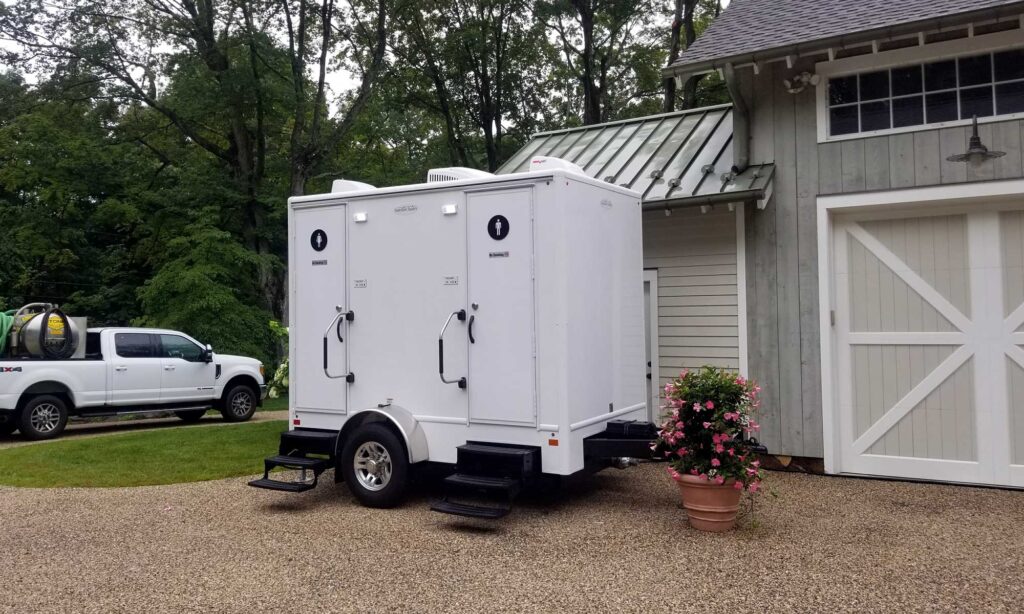
A restroom trailer is a towable or truck-delivered structure that houses several private stalls and a shared vanity area. The interior resembles a small powder room. Common features include air conditioning or heat, hot and cold running water, real flushing toilets, mirrors, interior lighting, and sometimes background music. Features vary by provider and model, so ask for a specific list before you book.
Trailers are the category most people mean when they talk about luxury portable restrooms. They suit weddings, galas, corporate events, film shoots, and any occasion where guests will spend hours on site and notice the details.
Multi-Stall Trailers for Larger Guest Lists
Trailers are usually described by station count, such as two, four, or eight stalls. Smaller models can sit in a driveway or on a lawn, while larger ones often provide separate men’s and women’s sides with their own entrances. That layout moves lines faster than a row of single cabins.
Power and water arrangements differ. Many trailers need a standard electrical outlet or a generator, and some need a fresh-water connection while others carry their own supply. Confirm both points before you commit, especially if your venue is a field or a vineyard rather than a building with hookups.
Single-Suite and VIP Units
Some providers also offer compact luxury cabins or small trailers with one private restroom. These work as a bridal suite, a performer’s green room, or an executive’s private facility next to a larger bank of units. Capacity is low, but the experience feels closer to a home bathroom than to a portable toilet.
Trailers have limits as well. They need level ground, truck access, and enough clearance to position and level them. They cost more than other options, and in peak wedding and festival months, availability can tighten quickly.
ADA-Accessible Portable Restrooms
Accessible units have wider doors, more interior turning space, grab bars, and a ramp or low threshold so wheelchair users can enter. A standard cabin is not usable for many people with mobility needs, and a unit that cannot be entered is no help to anyone who needs it.
Accessibility rules can apply to public events and some work sites, depending on local requirements. Check with your provider and your local permitting office rather than guessing. At private events, even where no rule applies, providing at least one usable unit is simply good hosting. A guest who uses a walker or wheelchair should not have to skip the restroom.
Accessible models come in standard, deluxe, and trailer formats. Not every luxury trailer includes an accessible stall, so ask directly. Placement matters too. The unit needs a firm, level approach path, since a ramp that ends in soft grass or loose gravel defeats the purpose.
Specialty Portable Restrooms for Particular Jobs
Not every need fits neatly into a cabin or a trailer. Providers also supply targeted equipment that makes a restroom setup work better.
Hand-Wash and Sanitizer Stations
Freestanding sinks with a fresh-water tank, soap, and paper towels give guests a place to wash up outside the cabin. They matter most at food events, school gatherings, and any site where hygiene is a priority. Placing a station beside a bank of standard units is a simple way to improve the whole setup.
Urinal Stands and High-Capacity Units
At concerts, races, and stadium-style events, open-air or partitioned urinal stations take pressure off the stalls. Because urination is quick, these stands move a large crowd through in less time than single cabins can.
Job-Site and Remote-Location Units
Work crews often need units built for rough conditions. Some are skid-mounted so a loader can reposition them as a project moves, others are designed for crane lifts on high-rise sites, and some are trailer-mounted for remote areas. Rules on how many toilets a crew needs vary by site type and location, so confirm them with your provider before ordering.
Shower and Changing Trailers
Long-term work camps, athletic events, and disaster-response operations sometimes need showers and changing space. These trailers have a larger footprint and require water supply and drainage, so they call for more planning than a standard toilet order.
Comparing the Main Types at a Glance
The table below summarizes how the most common options differ. Treat it as a starting point, since features vary by provider.
| Type | Best for | Typical features | Hookups needed | Main limitation |
|---|---|---|---|---|
| Standard single-stall | Job sites, short events, runs | Basic cabin, holding tank, sanitizer | None | Minimal comfort and space |
| Deluxe flushing | Longer events, markets, casual weddings | Flush, interior sink, better lighting | Usually none | Single stall, limited water supply |
| Luxury restroom trailer | Weddings, galas, corporate events | Multiple stalls, climate control, running water, vanity | Often power, sometimes water | Needs space, level ground, higher cost |
| ADA-accessible unit | Any event needing wheelchair access | Wider door, grab bars, ramp or low entry | Varies by format | Needs a firm, level approach path |
| Hand-wash station | Food events, schools, work sites | Water tank, soap, towels | Usually none | Does not replace a toilet |
| Shower or changing trailer | Work camps, athletic events | Showers, benches, privacy | Water and drainage | Large footprint, more planning |
How to Choose the Right Portable Restroom
Start With Headcount and Event Length
Providers use rule-of-thumb ratios to estimate how many units an event needs, and they can calculate the number for you. Several factors push demand up. Long events, open bars, families with young children, and a single cocktail hour that sends everyone to the restroom at once all add pressure. If you are unsure, add one unit rather than risk lines that frustrate guests.
Study the Site Before You Book
Delivery trucks need a path wide enough to reach the placement spot. The ground should be firm and level, since wet grass can strand a trailer and a slope can make doors swing open on their own. Consider distance from the main gathering area, lighting for evening use, shade, and whether power and water are within reach. For larger bookings, ask the provider for a site visit. Some venues and municipalities also set rules about placement or require permits.
Match the Restroom to the Guests
Think about who will use the units. A black-tie dinner calls for a trailer. A charity 5K can run on standard units plus hand-wash stations. A mixed event, such as an outdoor wedding with a casual reception, might combine a trailer with an accessible unit. The goal is to meet each group’s expectations without overspending on a feature nobody will use.
Plan for Servicing and Supplies
Ask how often units are serviced and whether service during the event is included. At larger gatherings, an on-site attendant can restock tissue and soap, empty trash, and clean surfaces between peak rushes. Before the event, walk through each unit to confirm it is stocked and working.
Common Mistakes to Avoid
The most frequent error is ordering too few portable restrooms and hoping for the best. A line that stretches past the cocktail hour is hard to fix on the day.
Another is overlooking accessibility until it becomes a problem. Booking late is also costly, because peak wedding and festival months fill the best inventory first. Placement mistakes happen too, such as putting units too far from the action or right next to the food area. Finally, many people assume a trailer is fully self-contained and learn too late that it needs an outlet or a water connection.
Matching the Restroom to the Moment
Portable restrooms come in more forms than most people expect, from a basic cabin on a work site to a multi-stall trailer at a wedding. Standard and deluxe units handle everyday needs, accessible models make events usable for everyone, and specialty equipment fills the gaps. The best choice follows from your guest count, your site, and the impression you want to leave. Compare options early, ask providers detailed questions, and book ahead. If you are planning a larger event, request a quote and a site assessment before you decide.
FAQs
1. What is the difference between a deluxe portable restroom and a restroom trailer?
A deluxe unit is a single-stall cabin with extras like a flush and an interior sink. A trailer holds several private stalls and a shared vanity area, usually with climate control and running water. Trailers handle more guests and feel closer to a permanent restroom.
2. Do luxury portable restrooms need electricity and water hookups?
It depends on the model. Many trailers need a standard outlet or generator, and some need a fresh-water connection while others carry their own. Ask your provider for the exact requirements before you pick a venue spot.
3. How many portable restrooms do I need for an event?
The number depends on guest count, event length, whether alcohol is served, and the mix of guests. Providers can calculate it for you. If you are close to the line between two quantities, choose the larger one.
4. Are portable restrooms available for people with disabilities?
Yes. ADA-accessible units offer wider doors, grab bars, and more interior space, and some trailers include accessible stalls. Ask your provider which of their options qualify, and make sure the approach path is firm and level.
5. How far ahead should I book portable restrooms?
Book as early as you can, especially for trailers during peak wedding and festival months. Weekday events and off-season dates usually need less lead time, but early booking gives you more choice.