
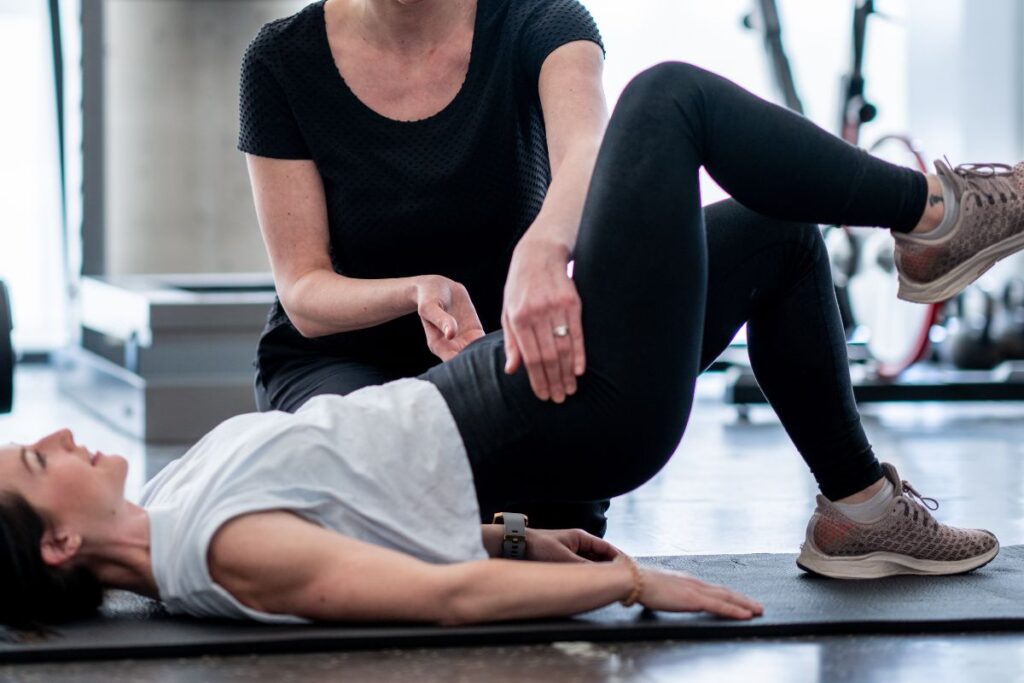
Joint pain can turn everyday activities, such as climbing stairs, walking the dog, or reaching overhead, into uncomfortable challenges. Although rest may provide temporary relief, improving how your body moves can be an important part of long-term joint care. A well-designed Corrective Exercise Program focuses on movement patterns, muscle imbalances, flexibility, and stability that may contribute to discomfort. When tailored to your needs, corrective exercise can help you move more confidently, improve function, and support a more active lifestyle.
What Is Corrective Exercise and How Does It Work?
Corrective exercise is a structured approach to improving movement quality, muscle function, flexibility, and joint stability. Rather than focusing only on strength or endurance, it addresses movement limitations that may place unnecessary stress on particular joints.
For example, limited ankle mobility may affect how your knees move during a squat. Similarly, weak hip muscles can make it harder to maintain proper alignment while walking or climbing stairs. These patterns do not automatically cause pain, but they may contribute to movement difficulties in some people.
Corrective exercise combines controlled movements, mobility drills, strengthening activities, and balance exercises to help the body move more efficiently. A qualified fitness professional can assess your movement and recommend exercises that match your abilities and goals.
Why Movement Quality Matters for Joint Comfort
Joints work alongside muscles, tendons, ligaments, and other tissues to support movement. When certain muscles lack strength or flexibility, other structures may have to work harder to complete a task.
Improving movement quality can help distribute physical demands more effectively. For instance, strengthening the muscles around the knee may improve your ability to control movements when standing up from a chair.
However, joint pain has many possible causes, including arthritis, previous injuries, and inflammatory conditions. Corrective exercise cannot address every underlying problem, so persistent or unexplained pain deserves professional evaluation.
How Corrective Exercise Can Help Reduce Joint Pain
Corrective exercise may improve joint comfort by addressing physical limitations that make everyday movements difficult. Its benefits depend on the source of the discomfort, exercise selection, and consistency.
Improving Muscle Balance Around the Joints
Muscles surrounding a joint work together to control movement and provide support. If some muscles are weaker than others, the body may rely on less efficient movement strategies.
Targeted strengthening can help improve coordination and balance between muscle groups. For example, exercises that strengthen the quadriceps, hamstrings, and hip muscles may help someone who struggles with controlled knee movements.
Balanced strength does not mean every muscle must have equal power. Instead, the goal is to develop enough strength and coordination for the activities you perform regularly.
Increasing Flexibility and Comfortable Range of Motion
Restricted movement can make routine tasks feel difficult. Tight calf muscles, limited ankle mobility, or reduced shoulder flexibility may affect how comfortably you walk, bend, or reach.
Gentle mobility exercises can help improve your available range of motion. Depending on your needs, these may include ankle movements, controlled hip rotations, or comfortable shoulder mobility drills.
Move gradually rather than forcing a joint into a painful position. The aim is to improve comfortable movement, not to achieve maximum flexibility as quickly as possible.
Building Stability Through Better Muscle Control
Joint stability depends partly on how effectively muscles respond to movement and changing demands. This becomes especially important when you turn, change direction, stand on one leg, or move across uneven ground.
Corrective exercise can incorporate balance training, controlled weight shifts, and single-leg movements when appropriate. These activities help develop coordination and body awareness, which may make everyday tasks feel more manageable.
People with significant balance problems or a history of falls should work with an appropriately qualified professional to select safe exercises.
Reducing Unnecessary Stress During Daily Activities
How you move can influence the demands placed on your joints. For example, poor control during repeated squats or lifting tasks may make an activity harder to perform comfortably.
Movement training can teach you to use a suitable range of motion, maintain control, and distribute effort across the muscles involved. These adjustments may be helpful during activities such as carrying groceries, getting out of a car, or standing from a low seat.
There is no single perfect posture for every person. The most useful approach is to find comfortable, efficient movement patterns that suit your body and the task at hand.
Which Joints May Benefit From Corrective Exercise?
Different joints have different movement requirements. A suitable exercise plan considers the affected area, your current abilities, and the activities that trigger discomfort.
Knee Pain and Lower-Body Control
Knee discomfort can make walking, climbing stairs, and sitting down challenging. Depending on the cause, a program may include quadriceps strengthening, hip exercises, gentle knee bends, and balance training.
For example, a person who struggles to stand from a chair might begin with controlled sit-to-stand practice using a chair of suitable height. As strength and tolerance improve, the exercise can be adjusted gradually.
Knee pain accompanied by major swelling, locking, instability, or difficulty bearing weight requires medical assessment rather than simply adding more exercise.
Hip Discomfort and Restricted Movement
The hips help support body weight and allow the legs to move in multiple directions. Limited mobility or reduced muscle strength may affect walking, stair climbing, and other daily activities.
Depending on the individual’s condition, suitable exercises may include gentle hip rotations, supported standing leg movements, and gluteal strengthening. These movements should remain within a comfortable range.
Hip pain can also originate from conditions that require specific treatment. A fitness trainer should not attempt to diagnose its cause through movement tests alone.
Shoulder Pain and Upper-Body Mobility
Shoulder discomfort can interfere with reaching shelves, dressing, lifting objects, and working overhead. Gentle mobility work and strengthening of the shoulder and upper-back muscles may improve function in some cases.
A beginner might start with comfortable shoulder blade movements or light resistance exercises selected by a qualified professional. The exercise range and resistance should match the person’s current tolerance.
Sharp pain, sudden weakness, or a major loss of shoulder movement should be evaluated by a healthcare professional before beginning a new routine.
Ankle and Foot Limitations
Ankle mobility and foot strength help the body adapt to walking surfaces and maintain balance. Restricted ankle movement may affect squatting or stair climbing, while reduced strength can make some activities feel less stable.
Depending on the cause, exercises may include supported calf raises, gentle ankle movements, and balance drills near a stable surface. Small, controlled movements are often a practical starting point for beginners.
People with recent ankle injuries, substantial swelling, or difficulty walking should seek appropriate assessment before progressing their activity.
Common Corrective Exercises That Support Joint Health
The right exercises depend on your movement limitations, pain level, and fitness experience. The following table provides examples of activities that may support joint function when they are appropriate for the individual.
| Exercise | Primary focus | Potential benefit | Beginner-friendly tip |
|---|---|---|---|
| Sit-to-stand | Knee and hip strength | Supports everyday transitions | Use a stable chair and move slowly |
| Glute bridges | Hip and gluteal strength | Develops support for lower-body movement | Lift only as high as feels comfortable |
| Heel raises | Calf and ankle strength | Supports walking and balance | Hold a sturdy counter for support |
| Gentle ankle circles | Ankle mobility | Encourages comfortable ankle movement | Use small, controlled circles |
| Shoulder blade squeezes | Upper-back control | Supports comfortable shoulder movement | Keep your shoulders relaxed |
| Supported weight shifts | Balance and coordination | Builds confidence with weight-bearing | Stand near a stable surface |
These exercises are examples, not a universal prescription for joint pain. Choose movements that suit your condition, and stop if you experience sharp pain, increasing discomfort, or unusual symptoms.
How to Choose the Right Starting Exercise
Begin with the movement that addresses a specific difficulty in your daily routine. If stairs are uncomfortable, for example, a professional may assess your knee strength, hip control, ankle mobility, and stair-climbing technique before selecting exercises.
Start with a manageable range of motion and light resistance. You do not need complicated equipment or intense workouts to begin improving movement quality.
How to Build a Safe Corrective Exercise Routine
Consistency matters, but exercising through pain or progressing too quickly can make symptoms worse. A structured approach helps you build capacity while paying attention to how your joints respond.
Begin With an Appropriate Assessment
Before starting, identify which activities cause discomfort, when symptoms occur, and whether any movements feel restricted. A physical therapist or another qualified healthcare professional can assess persistent joint pain and determine whether specific exercises are appropriate.
A fitness trainer can help with exercise technique and general movement training within their scope of practice. However, trainers should not diagnose medical conditions or replace rehabilitation provided by a licensed healthcare professional.
If you have arthritis, a recent injury, or a chronic joint condition, ask your healthcare provider which movements and intensity levels are suitable.
Progress Gradually Instead of Pushing Through Pain
A useful routine begins with manageable exercises and increases difficulty only when your body tolerates the current level. You might initially perform a few controlled repetitions, then gradually increase repetitions, resistance, or movement range as appropriate.
Pay attention to how you feel during exercise and afterward. If discomfort increases substantially or remains worse later that day or the following morning, reduce the intensity and seek guidance if symptoms persist.
Mild muscle effort can be expected during strengthening. However, sharp joint pain, new swelling, or a feeling that the joint is giving way should not be ignored.
Make Warm-Ups and Recovery Part of the Plan
A short warm-up prepares you for movement without requiring an intense workout. Depending on your abilities, a few minutes of easy walking or gentle joint movements may be enough.
Allow time for recovery between challenging sessions, particularly when you are new to exercise. You can also alternate strengthening activities with comfortable walking or other low-impact movement if these activities are appropriate for your condition.
Recovery is not a reason to avoid all movement. Instead, it helps you adjust your activity to your current capacity.
Corrective Exercise Compared With General Fitness Training
General fitness training develops qualities such as strength, endurance, and cardiovascular fitness. Corrective exercise places more emphasis on specific movement limitations and the control needed to perform daily activities comfortably.
Both approaches can complement each other. Someone experiencing mild movement restrictions, for instance, might benefit from targeted mobility and stability work alongside a suitable walking or strength-training routine.
| Feature | Corrective exercise | General fitness training |
|---|---|---|
| Main emphasis | Movement limitations and control | Overall strength, endurance, and fitness |
| Exercise selection | Based on individual needs | Based on fitness goals and ability |
| Progression | Addresses specific movement goals | Builds overall physical capacity |
| Joint health role | May improve mobility, stability, and movement tolerance | Helps maintain strength and activity levels |
| Best use | Targeted movement improvement | Broader health and fitness development |
Neither approach is automatically better for every person. The most appropriate choice depends on your symptoms, health status, and goals. A combined plan may be useful when targeted movement work and general exercise are both safe and suitable.
How to Measure Progress Beyond Pain Levels
Pain is important, but it is not the only way to assess improvement. Some people notice changes in everyday function before their discomfort changes significantly.
Track activities that matter to you, such as walking for 15 minutes, climbing a flight of stairs, reaching overhead, or standing from a chair. Record how difficult each activity feels and whether you can perform it with better control.
You can also monitor your exercise tolerance, balance, comfortable range of motion, and confidence during movement. Review these observations regularly with your healthcare professional or fitness trainer.
Progress will vary from person to person. Joint conditions, sleep, activity levels, stress, and other health factors can influence symptoms, so avoid judging success by a single workout or a specific deadline.
When Professional Guidance Is Essential
Corrective exercise can support joint health, but it is not a substitute for medical care when symptoms indicate a more serious problem.
Seek prompt medical attention for severe or sudden joint pain, a visibly deformed joint, substantial swelling after an injury, or an inability to bear weight. A hot, red, swollen joint accompanied by fever also requires urgent evaluation because infection may be a concern.
For ongoing discomfort, a healthcare professional can investigate possible causes and recommend suitable treatment. Physical therapists can develop individualized rehabilitation plans, while qualified fitness trainers can support appropriate exercise technique and progression when medically suitable.
Professional guidance is particularly valuable when you are unsure which movements are safe or when symptoms repeatedly return after exercise.
Conclusion
Joint pain can make ordinary activities feel difficult, but the right movement strategy may help you regain comfort, strength, and confidence. Corrective exercise focuses on improving mobility, muscle control, balance, and stability to address limitations that may contribute to movement difficulties. The most effective approach starts with an appropriate assessment, uses exercises suited to your needs, and progresses at a manageable pace. If pain persists or worsens, seek professional guidance rather than pushing through it. With consistent, individualized training and realistic expectations, you can work toward better joint function and a more active lifestyle.
Frequently Asked Questions
1. Can corrective exercise eliminate joint pain completely?
Not always. Corrective exercise may improve mobility, strength, and function, which can reduce discomfort for some people. However, results depend on the cause of the pain. Conditions such as arthritis or significant joint injuries may require medical treatment alongside exercise.
2. How often should I perform corrective exercises?
Frequency depends on the exercises, your current fitness level, and the condition affecting your joints. Some gentle mobility activities may be appropriate more frequently, while strengthening exercises may require recovery time between sessions. Follow an individualized plan and adjust activity according to your symptoms.
3. Is corrective exercise safe for people with arthritis?
Appropriately selected exercise can help many people with arthritis maintain strength, mobility, and daily function. However, exercises should reflect the affected joints, symptom severity, and individual abilities. Consult your healthcare provider or physical therapist before starting a new routine, particularly during a symptom flare.
4. How long does it take to notice improvements?
Some people notice improved movement or confidence within a few weeks, while others need more time. The timeline depends on the underlying condition, consistency, exercise selection, and recovery. Track practical improvements in daily activities rather than expecting pain to disappear on a fixed schedule.
5. Should I stop exercising if my joints hurt?
Stop or modify an exercise that causes sharp, increasing, or unusual joint pain. Gentle activity may remain appropriate for some conditions, but worsening symptoms, swelling, instability, or persistent discomfort warrant professional assessment. Seek medical advice to determine which movements are safe for you.