
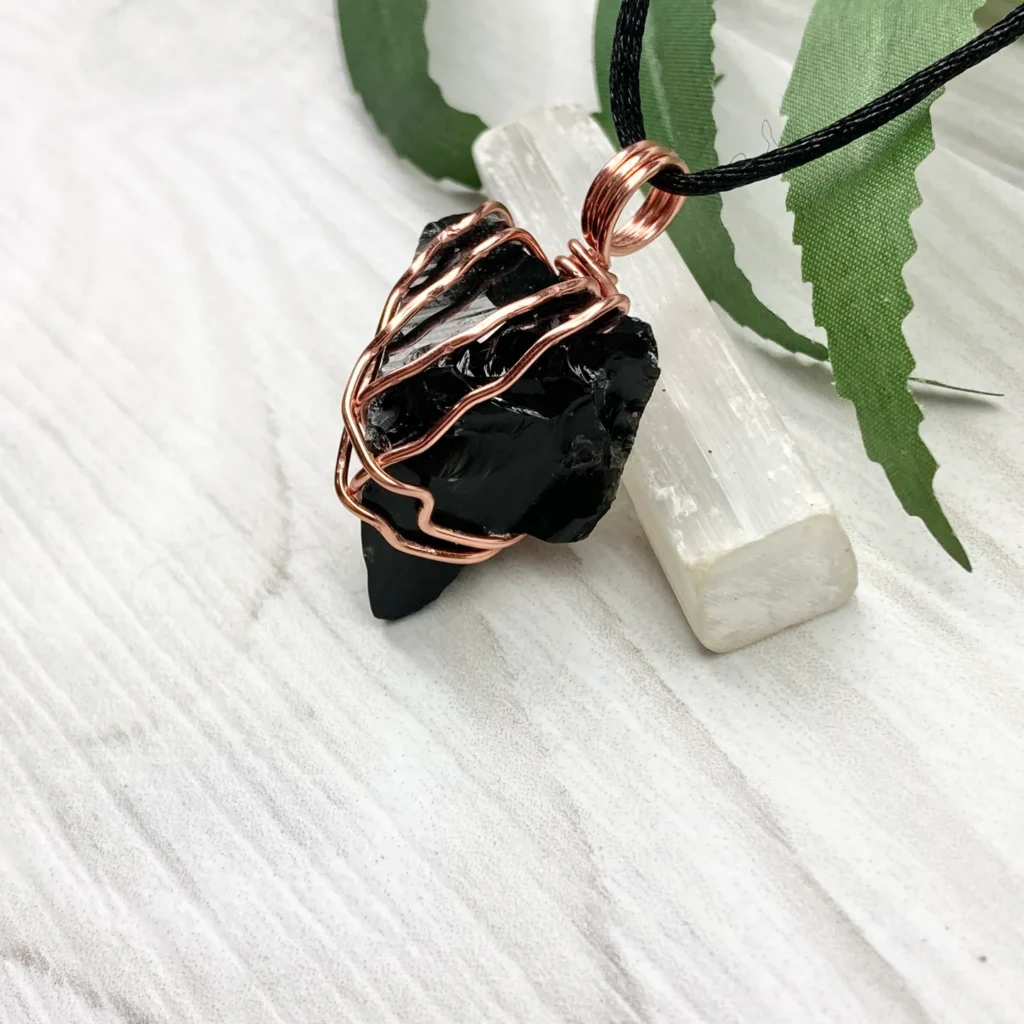
A polished black stone resting against your collarbone looks effortless, but wearing it around the clock is a different matter. A black obsidian necklace is striking, affordable, and loved for its glassy shine, yet it is made of natural volcanic glass with real limits. Some people are better off wearing it occasionally, or choosing another stone entirely. This guide explains who those people are, why it matters, and how to wear obsidian more safely.
What Makes Obsidian Different From Other Gemstones
Obsidian forms when lava cools so quickly that crystals never get the chance to grow. The result is natural glass rather than a true crystalline mineral. That is why it looks so smooth and reflective, and it is also why it behaves differently from quartz, garnet, or onyx.
On the Mohs scale, which ranks scratch resistance from 1 to 10, obsidian sits at roughly 5 to 5.5. That is softer than quartz, which scores a 7. Ordinary household dust contains tiny quartz particles, so a pendant that rubs against clothing and skin all day can slowly lose its polish.
Obsidian is also brittle. When it breaks, it fractures in curved, shell-like patterns and can leave very sharp edges. Ancient toolmakers valued it for exactly that reason. In modern jewelry, the same trait means a hard knock against a countertop or a car door can chip or crack the stone.
One more point is worth knowing before you buy. Some pieces sold as obsidian are actually manufactured black glass. These look similar but may not behave the same way, and sellers do not always label them clearly. Asking a seller directly whether a piece is natural stone is a reasonable step.
None of this makes an obsidian necklace a bad choice. It simply means the stone suits some lifestyles better than others.
People With Metal Sensitivities
Obsidian itself rarely causes skin reactions. The metal around it often does. Chains, clasps, jump rings, and pendant caps are where irritation usually starts.
Nickel is among the most common triggers of allergic contact dermatitis from jewelry. It appears in many inexpensive alloys, and it can also turn up in some white gold. A person with a nickel allergy may notice redness, itching, or a rash along the neckline within hours or days of wearing a piece. Because the necklace rests in one spot for many hours, the contact is steady and the reaction can build.
Choosing Safer Metals
If you react to metal jewelry, look at the hardware before you look at the stone. Surgical-grade stainless steel such as 316L, titanium, and solid gold in higher karats are generally better tolerated. Sterling silver works for many people, although it contains other metals, usually copper, that can bother a smaller group. Plated pieces deserve extra caution, because the thin coating can wear away and expose the base metal underneath.
If a rash appears and keeps returning, stop wearing the piece and speak with a doctor or dermatologist. Patch testing can identify which metal is responsible, which saves guesswork the next time you shop.
Active Lifestyles and Hands-On Jobs
A pendant that looks perfect at brunch may be a poor match for a deadlift session. Active routines expose an obsidian necklace to sweat, impact, and snagging, all at once.
Gym, Sports, and Outdoor Work
Running, lifting, and contact sports all involve sudden movement. A pendant can swing into your chin, catch on equipment, or take a hit that chips the stone. Sweat adds another problem, since salt and moisture can corrode clasps and darken certain metals over time. Anyone who trains regularly is better off taking the necklace off beforehand.
People who work with machinery, power tools, or rotating equipment face a more serious concern. A chain can catch and pull, and a chain that does not break away can cause injury. Healthcare workers, mechanics, and workshop staff should follow their workplace safety rules, which often restrict necklaces altogether.
Households With Babies and Pets
Babies and toddlers grab whatever is within reach. A chain around an adult’s neck can be tugged hard, and loose beads or small pendants pose a choking risk if they come off. A broken piece of obsidian can also leave a sharp edge in a small hand. Parents of infants often choose to skip necklaces or wear them only when the child is not nearby.
Cats and dogs can paw at dangling pendants too. If your pet likes to jump into your arms, a rigid stone swinging between you is worth thinking about.
Sleeping, Showering, and Swimming in Your Necklace
Wearing a necklace around the clock is the habit that causes the most avoidable damage. Convenience is the usual reason, since it saves you from removing the piece every night. The cost shows up slowly.
Obsidian handles water better than many soft or porous stones, so a quick splash will not ruin it. The trouble lies with everything attached to it. Cords made from leather, cotton, or silk weaken when they stay damp, and glue holding a pendant cap in place can loosen. Chlorine in pools and the minerals and heat in hot tubs can tarnish or pit metal, and soap residue leaves a dull film on the stone.
Sleep brings its own risks. You roll over, the pendant presses into your skin or the pillow, and the chain can twist around your neck or tangle in your hair. A clasp under pressure may also bend or snap. For a stone that chips under impact, eight hours of pressing and shifting is not ideal.
If you love the feel of having it on, consider reserving the necklace for waking hours and keeping a dry spot beside your bed for it at night.
Reactive Skin and Ongoing Skin Conditions
People with eczema, contact dermatitis, or generally reactive skin should be cautious about wearing any necklace continuously. Moisture and friction collect beneath a pendant, and trapped sweat can irritate skin that is already sensitive. Rough chain links or a tight cord can make flare-ups worse.
If you have a skin condition, a few adjustments can help. Choose a smooth, lightweight chain, avoid wearing the piece during flare-ups, and let the skin rest regularly. A longer chain that hangs away from the neck can also reduce friction. Your dermatologist is the right person to ask about which materials suit your skin, since individual triggers vary widely.
When the Reasons for Wearing It Are Emotional
Obsidian has a loyal following among people who connect it with protection, grounding, or emotional release. These beliefs come from spiritual and folk traditions rather than from scientific testing. There is no solid evidence that wearing a stone treats a medical or psychological condition, and it is fair to be clear about that.
Wearing a necklace for personal meaning is perfectly reasonable. Many people find comfort in a ritual object, much like a keepsake or a lucky charm. The concern arises when the stone becomes a replacement for care. Someone dealing with persistent anxiety, depression, grief, or physical symptoms should not rely on jewelry in place of professional support.
A gentler warning applies to anyone who feels distressed when the necklace is off. If taking it off for a day feels unbearable, that is worth noticing. A piece of jewelry works best as a pleasant addition to your life, not as something you feel you cannot function without.
Who Should Be Careful: A Quick Comparison
The table below pulls together the groups discussed above, so you can see the main concern and a practical alternative at a glance.
| Group | Main Concern | Safer Approach |
|---|---|---|
| People with nickel or metal allergies | Skin reactions from chain, clasp, or plating | Choose titanium, 316L steel, or higher-karat gold hardware |
| Gym-goers and athletes | Chipping, snagging, sweat damage | Remove before workouts; store safely |
| Machine operators and hands-on workers | Chain catching in equipment | Follow workplace rules; skip necklaces on shift |
| Parents of babies and toddlers | Pulling, choking, sharp edges if broken | Skip it near infants or wear it only when the child is away |
| Swimmers and frequent bathers | Weakened cords, tarnished metal, dull stone | Take it off before water; dry thoroughly after any contact |
| Light sleepers or restless sleepers | Pressure, tangling, broken clasps | Remove at night |
| Reactive or eczema-prone skin | Irritation from friction and trapped moisture | Use a smooth, lightweight chain; rest the skin often |
| Those seeking health or emotional treatment | Delayed professional care | Treat jewelry as personal meaning, not treatment |
How to Choose and Care for an Obsidian Piece
Smart shopping reduces most of the risks above. Start with the stone itself. Smooth, polished beads and cabochons (stones with a rounded top and flat back) are gentler on the wearer than rough, raw chunks, which can have sharp edges. Look for a setting that protects the stone’s edges rather than leaving them exposed.
Next, check the hardware. Ask what the chain and clasp are made from, and choose a break-away or lightweight chain if you live or work around children, pets, or moving parts. A reputable seller should answer these questions without hesitation.
Everyday Care That Extends Its Life
Care for obsidian is simple. Wipe it with a soft, damp cloth after wearing, then dry it fully. Avoid ultrasonic cleaners and steam, because vibration and sudden temperature shifts can stress a stone that may already contain tiny internal fractures. Skip harsh chemicals, perfume, and hairspray, which can dull the finish.
Store the necklace in a soft pouch or a lined jewelry box compartment of its own. Harder gems, including quartz, diamonds, and sapphires, can scratch it if they touch. A little separation prevents the fine scratches that slowly turn a glossy surface cloudy.
Finally, rotate your jewelry. Wearing different pieces on different days gives your skin a break and spares each necklace from constant wear.
Conclusion
An obsidian necklace can be a beautiful, meaningful piece, but daily, round-the-clock wear does not suit everyone. People with metal sensitivities, reactive skin, active routines, hands-on jobs, or small children at home have good reasons to be selective. The same goes for anyone hoping the stone will stand in for medical or emotional care.
The practical fix is rarely to give it up. Check the metal, remove it for workouts, water, and sleep, and store it carefully. Worn thoughtfully, obsidian can stay glossy and comfortable for years. If you are unsure whether it fits your lifestyle or skin, a jeweler or dermatologist can help you decide.
Frequently Asked Questions
Is it safe to wear an obsidian necklace every day?
For many people, occasional or daytime wear is fine. Constant wear raises the risk of chips, scratches, and skin irritation, especially if the chain contains nickel. Giving the piece regular rests is a safer habit.
Can obsidian cause skin allergies?
The stone itself rarely does. Reactions usually come from the chain, clasp, or plating, with nickel being a common culprit. If a rash appears, stop wearing the piece and consult a doctor.
Should I sleep with an obsidian necklace on?
It is better not to. The pendant can press into your skin, the chain can tangle or twist, and the clasp can bend. Taking it off at night also protects the stone from chips.
Does obsidian break easily?
It is brittle. A sharp knock against a hard surface can chip or crack it, and broken edges can be sharp. Polished pieces with protective settings hold up better than raw, exposed stones.
Can an obsidian necklace replace medical or mental health treatment?
No. Scientific evidence does not support obsidian as a treatment for any condition. Many people wear it for personal meaning, which is fine, but anyone with symptoms should seek qualified professional care.